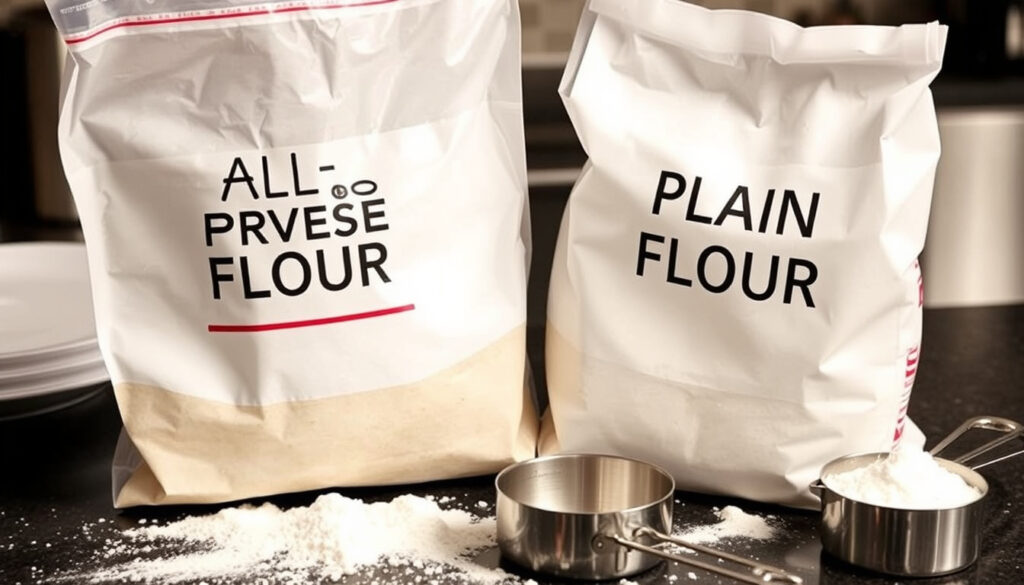
Is All Purpose Flour the Same as Plain Flour – A Clear Guide
If you have ever tried to follow a recipe from across the Atlantic, you have likely stared at the ingredient list and wondered: is all purpose flour the same as plain flour? The short answer is yes – they are essentially the same type of flour – but subtle differences in protein content and regional milling practices can affect your baking results. This article breaks down exactly what sets them apart, how to substitute one for the other, and what other flours you should know about.
Plain flour (UK) and all-purpose flour (US) are both versatile, medium-strength white flours intended for everyday baking. Both are milled from a blend of hard and soft wheat, giving them a protein content that supports everything from cookies to pie crusts. The naming difference is purely regional: what Americans call all-purpose, the British call plain. However, the two are not always chemically identical, and that nuance matters for delicate recipes.
To help you bake with confidence, we have combined expert sources, detailed comparisons, and practical substitution guidance. Read on for a clear, fact-based answer to the question “is all purpose flour the same as plain flour?”
Is all purpose flour the same as plain flour?
At a glance: UK vs US flour types
Key insights about the equivalence
- Plain flour (UK) and all-purpose flour (US) are functionally the same – both have medium protein content (10–12%).
- The main difference is regional naming; British recipes often use “plain flour” where American recipes say “all-purpose”.
- Despite equivalence, slight protein variations between brands can affect texture, especially in precise baking.
- Self-raising flour is not the same – it contains baking powder and salt.
- Bread flour and cake flour have significantly different protein levels and should not be substituted directly.
Quick fact table
| Fact | Detail |
|---|---|
| Plain flour (UK) = All-purpose flour (US) in most cases. | Both are refined white flours with medium protein. |
| Protein content range | UK plain ~9–10%; US all-purpose ~10–12% (source: Goodwoods, The Clever Carrot). |
| Self-raising flour contains added leavening | All-purpose does not. |
| Bread flour has higher gluten (12–14%) | Better for yeast breads. |
| White flour is a broader category | All-purpose is one type of white flour. |
| Maida (India) is similar but more refined | Often bleached; atta is whole wheat, different. |
What is all-purpose flour UK?
Is all purpose flour the same as plain flour UK?
In the United Kingdom, the term “all-purpose flour” is rarely used. Instead, the closest everyday equivalent is plain flour. According to Nelstrop Flour Mills (UK miller), “plain flour is an all-purpose flour which means it can be used if the recipe recommends all-purpose flour.” HelloFresh UK also confirms that “plain flour is the British equivalent of all-purpose flour.” So for most recipes, you can swap the two without worry.
Sources indicate that UK plain flour typically contains 9–10% protein, while US all-purpose flour ranges from 10–11.7%. This difference is small but can matter for very delicate bakes such as sponge cakes or shortbread. If a recipe is sensitive to gluten structure, consider adjusting liquid or mixing with a lower-protein flour.
All purpose flour is maida or atta?
Maida is a refined white flour widely used in South Asian cooking. It is similar to all-purpose flour in that both are milled from wheat and are relatively low in fibre. However, maida is often more finely milled and bleached, making it a close but not identical substitute for plain or all-purpose flour. Atta, on the other hand, is a whole-wheat flour with a much higher fibre and bran content. It behaves very differently in baking and cannot be used as a direct replacement for plain or all-purpose flour without significantly altering the texture.
Is self raising flour the same as all purpose flour?
Is all purpose flour plain or self raising?
All-purpose flour is always plain, meaning it contains no added leavening agents. Self-raising flour (called self-rising in the US) is plain flour with baking powder and often salt already added. The two are not interchangeable unless you adjust the recipe accordingly. If a recipe calls for self-raising flour and you only have plain flour, you can add 1.5 to 2 teaspoons of baking powder per 150 g of flour – but check the recipe for additional salt.
Is plain flour the same as bread flour?
No. Bread flour (known as strong flour in the UK) has a significantly higher protein content – around 12–14% for UK strong flour and 13–16% for US bread flour. The extra gluten gives bread its chew and structure. Plain flour, with its lower protein, will produce a softer, less elastic dough. While you can sometimes use plain flour for bread, the result will be denser and less airy.
Is all purpose flour the same as white flour?
White flour is a broad category that includes all-purpose flour, bread flour, cake flour, and pastry flour. So while all-purpose flour is a type of white flour, not every white flour is all-purpose. When a recipe simply says “white flour,” it is usually safe to use all-purpose or plain flour unless otherwise specified.
Many baking mishaps occur when cooks accidentally use self-raising flour in place of plain all-purpose flour. Because self-raising already contains leavening, the baked good may rise too much and then collapse, or develop a bitter, soapy taste. Always check the label before adding any chemical leavener to your dough.
Can I use plain flour instead of all purpose flour?
Yes, you can. For the vast majority of home baking, UK plain flour and US all-purpose flour can be substituted 1:1. The most common outcome is a slight textural difference – the higher protein in US all-purpose may produce a slightly chewier result, while UK plain flour can yield a more tender crumb. Cotswold Flour notes that “you can usually use all-purpose flour in place of plain flour, but the result may be slightly stronger.” If the recipe is delicate (e.g., a Victoria sponge or shortcrust pastry), you might want to replace a portion of the all-purpose flour with cake flour to lower the protein, or simply reduce the liquid slightly when using UK plain flour in a US recipe, because UK flour can absorb less moisture.
When substituting UK plain flour for US all-purpose, no extra steps are normally needed. However, as Goodwoods Flour points out, “UK plain flour may absorb less liquid than some US all-purpose flours, so batter or dough may need a small adjustment.” Start with the recipe’s liquid measurement and add a little more only if the batter seems too stiff.
For most home baking, treat: UK plain flour ≈ US all-purpose flour; UK strong flour ≈ US bread flour; UK self-raising flour is not equal to plain flour because it already contains baking powder. Expect the main difference to be texture, not a complete failure of the recipe, unless the bake is very sensitive to gluten strength.
How did the naming difference between plain flour and all-purpose flour develop?
- – Flour milling standardisation in the United States leads to the branding of “all-purpose” as a versatile blend.
- – The United Kingdom adopts “plain flour” and “self-raising” as the standard terms to distinguish between flour with and without added leavening.
- – The internet makes global recipes widely accessible, causing confusion between regional flour names.
- – Increased demand for clarity prompts flour brands and baking blogs to explicitly address the UK–US flour equivalence.
What do we know and what remains uncertain about flour equivalences?
| Established information | Information that remains uncertain |
|---|---|
| All-purpose flour (US) and plain flour (UK) are the same type of flour – both are medium-protein white flours. | Exact protein percentage varies by brand; some UK plain flours may have slightly less gluten (9–10%) than US all-purpose (10–12%). |
| Self-raising flour is different because it includes leavening agents. | Baking results may differ subtly due to regional wheat varieties and milling processes. |
| You can substitute plain flour 1:1 for all-purpose flour in most recipes. | Whether all-purpose flour is exactly equivalent to maida depends on brand and processing (bleaching, fineness). |
Why does the terminology difference exist?
The naming gap is rooted in marketing and regulation. In the United States, “all-purpose” was coined to advertise a flour that could handle everything from cakes to breads. In the United Kingdom, the term “plain” was used simply to differentiate from “self-raising” flour, which had baking powder already mixed in. Both flours are milled from a blend of hard and soft wheat, giving a medium protein content that works for most home baking. Consumers should understand that the conversion is safe for the vast majority of recipes, but for professional pastry work where exact protein content is critical, checking the label or using a flour with a known protein percentage is advisable.
What do the experts say?
“Plain flour is an all-purpose flour which means it can be used if the recipe recommends all-purpose flour.”
– Nelstrop Flour Mills (UK miller)
“Plain flour is the British equivalent of all-purpose flour.”
“All-purpose flour is the most versatile flour for baking; it’s what plain flour is called in the UK.”
Is all purpose flour the same as plain flour? The bottom line
Yes – for all practical purposes, all-purpose flour (US) and plain flour (UK) are the same. You can use them interchangeably in nearly any recipe without fear of disaster. The only caveat is that minor protein variations may slightly affect the texture of very delicate bakes. If you want to explore further, check out our baking substitutions guide and types of flour explained for more detailed comparisons.
Frequently Asked Questions
What is the typical protein content of UK plain flour?
UK plain flour typically has a protein content of 9–10%.
What is the typical protein content of US all-purpose flour?
US all-purpose flour typically ranges from 10–12% protein, depending on the brand.
Can I use self-raising flour instead of all-purpose flour?
No – self-raising flour contains added baking powder and salt. If you only have self-raising, you can use it in place of all-purpose only if you omit the leavening agent in the recipe (and adjust salt).
What is the difference between maida and atta?
Maida is a refined, bleached white flour similar to all-purpose. Atta is a whole-wheat flour with higher fibre; it behaves very differently in baking and is not a direct substitute.
Is strong flour the same as bread flour?
Yes – strong flour (UK) is the same as bread flour (US). Both have higher protein (12–14%) for yeast doughs.
Do I need to adjust liquid when substituting UK plain flour for US all-purpose?
Possibly. UK plain flour may absorb less liquid than some US brands, so start with the recipe’s liquid amount and add more only if the batter seems too thick.
More related posts
 Edward Guinness – The Real Story of the Earl of Iveagh and His Legacy
 Iran Supreme Leader – Mojtaba Khamenei Named Successor After Ali Khamenei Death
 Galaxy A71 to Buy – UK Prices, Specs & Best Deals in 2025
 The Capture Season 3 – Complete Cast, Episodes and Ending
 Sea of Stars Maldives – Where, When and How to Visit Vaadhoo
 Phil Taylor – Biography, Net Worth & Retirement
 Self Esteem – Musician, Meaning, and Practical Tips
 Cold Weather Payment Eligible Areas – Postcode Checker & Guide 2025