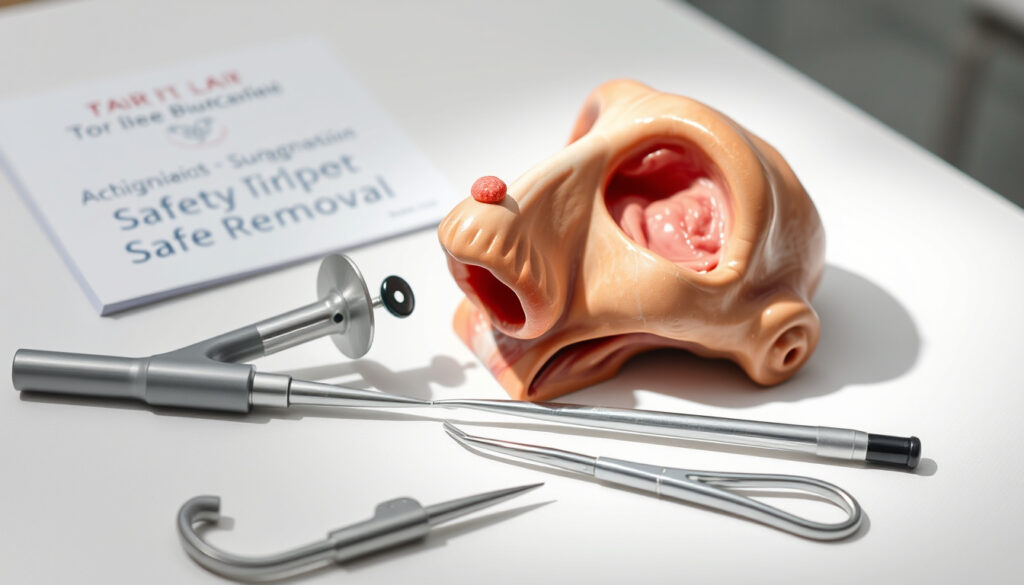
Fibrous Papule of the Nose – Causes Removal and Safety Guide
A small, firm bump on the nose can raise questions. Many people notice such a lesion and wonder whether it is a pimple, a mole, or something more concerning. Fibrous papule of the nose is a common and entirely benign skin condition that primarily appears in adults. Dermatologists see it regularly, and it is well understood within medical literature. This article explains what it is, examines its causes, describes its appearance, and outlines safe removal options based on current dermatological evidence.
Fibrous papules are noncancerous growths that typically develop on or near the nose tip. They are small, firm, and dome-shaped, and they do not cause pain or itching. Because they are harmless, treatment is never medically required. However, some people choose to have them removed for cosmetic reasons. Understanding the nature of this lesion is the first step toward making an informed decision.
The information presented here draws on authoritative sources including the Cleveland Clinic, DermNet NZ, and other dermatology clinics. No content should replace a consultation with a qualified dermatologist.
What Is a Fibrous Papule of the Nose?
A small, firm, harmless bump on or near the nose. Common in adults, noncancerous.
Exact cause unknown; thought to be a benign proliferation of fibrous tissue.
No. It is benign and does not turn into cancer. Removal is cosmetic, not medical.
Removal options include excision, shave biopsy, laser, or cryotherapy. Do not attempt at-home removal.
- Fibrous papule of the nose is a common, benign skin lesion that does not require treatment unless for cosmetic reasons.
- It is often confused with a pimple or skin cancer, but it has distinct clinical features.
- At-home removal is dangerous and can lead to infection, scarring, or misdiagnosis.
- Removal by a dermatologist is quick, safe, and usually covered by insurance if medically indicated.
- The lesion is typically stable over time and does not spontaneously resolve.
- A biopsy may be performed during removal to confirm the diagnosis and rule out other conditions.
| Feature | Details |
|---|---|
| Size | 1–5 mm in diameter |
| Color | Skin-colored, white, or reddish |
| Shape | Dome-shaped, smooth, firm |
| Location | Nose or immediate surrounding area |
| Age of onset | Early to mid-adult life |
| Commonality | Very common in adults |
| Malignancy risk | None – benign |
Is a Fibrous Papule Dangerous or Cancerous?
No. A fibrous papule of the nose is benign and carries no malignant potential. According to the NHS, fibrous papules are classified as noncancerous growths that do not require medical intervention. The Cleveland Clinic states clearly that these lesions are harmless and do not turn into cancer.
Because the lesion is stable over months to years and does not produce symptoms such as pain or bleeding, routine removal is not necessary. Some patients, however, choose to have the bump removed for cosmetic reasons or because it catches their attention during daily grooming.
Although fibrous papules are not cancerous, any lesion that changes in size, color, or shape should be evaluated by a dermatologist. These changes could indicate a different condition that requires attention.
Can a Fibrous Papule Turn Into Cancer?
There is no evidence that a fibrous papule of the nose can transform into a malignant tumor. Histologically, it consists of benign fibrous tissue with increased collagen, fibroblasts, and blood vessels. DermNet NZ and other dermatology authorities confirm that malignant degeneration does not occur.
Does a Fibrous Papule Need to Be Removed?
Treatment is entirely optional. Removal is performed only for cosmetic reasons or if the lesion resembles another growth that requires biopsy. The decision to remove is a personal one. A dermatologist can provide guidance during a routine consultation.
What Does a Fibrous Papule Look Like? (Pictures and Pathology)
Fibrous papules are small, usually measuring 1 to 6 mm in diameter. They present as firm, dome-shaped bumps that are smooth to the touch. The color can vary: skin-colored, white, red, or slightly pigmented. Unlike a pimple, a fibrous papule does not have a central pore or contain pus. Unlike a wart or skin tag, it is firmer and sessile, meaning it has no stalk.
What Is the Pathology of Fibrous Papule?
Under a microscope, the lesion shows an overgrowth of fibrous tissue in the dermis. Collagen bundles increase, fibroblasts become more numerous, and blood vessels dilate. There is no sign of atypia or malignancy. The pathology is stable; the lesion does not evolve into something more aggressive over time.
How Is Fibrous Papule Diagnosed?
A dermatologist can typically diagnose a fibrous papule through visual examination. The characteristic location, shape, and firmness are usually enough for identification. If the appearance is atypical or if there is concern about another lesion such as basal cell carcinoma, a shave biopsy may be performed during removal. No imaging or laboratory tests are needed.
A fibrous papule most often sits on the tip of the nose or on the surrounding nasal skin. It is solitary in most cases. Clinical images are available from DermNet NZ and other dermatology resources for visual comparison.
How to Remove a Fibrous Papule of the Nose
Several safe and effective removal methods exist. All are outpatient procedures performed under local anesthesia. The choice of method depends on the size of the lesion, the desired cosmetic outcome, and the patient’s budget. Recurrence is rare when removal is complete.
| Method | Description | Pros | Cons |
|---|---|---|---|
| Shave Excision | Shave off with a blade, often followed by cautery. Tissue for biopsy. | Low cost; allows histology | May leave scar or indentation |
| Surgical Excision | Full cut-out of the lesion. | Complete removal | Small scar possible |
| Cryotherapy | Freezing with liquid nitrogen. | Non-invasive | May need multiple sessions; hypopigmentation risk |
| Electrosurgery | Electric current burns off the lesion. | Quick; heals in 5–7 days | May regrow if incomplete |
| Laser Therapy (CO2) | Vaporizes lesion; shave first for biopsy. | Superior cosmetic results | Expensive; limited availability |
Do not attempt to remove a fibrous papule at home. Cutting, popping, freezing, or using over-the-counter removal products can lead to infection, permanent scarring, incomplete removal, and misdiagnosis of a potentially different lesion. Always consult a dermatologist.
What Is the Removal Cost of a Fibrous Papule?
Cost varies by location, provider, and method. In the United States, typical costs range from $100 to $500 for excision or shave removal. Insurance may cover the procedure if a biopsy is needed to rule out other conditions. In the United Kingdom, clinics such as Renew Skin & Health Clinic quote prices starting from £300 for CO2 laser removal. Midland Skin offers consultation and removal services, with fees available upon booking. Always request a quote before proceeding.
Where Can I Get Fibrous Papule Removal Near Me?
Board-certified dermatologists and skin clinics routinely perform these minor procedures. Hospital-based dermatology departments, private skin clinics, and specialized surgery centers are all suitable options. Online directories such as the American Academy of Dermatology’s “Find a Dermatologist” tool can help identify nearby providers. For those in the UK, NHS consultations are available, though removal may not be offered unless medically indicated.
When Does a Fibrous Papule Typically Develop?
The lesion usually appears gradually in early to mid-adulthood, often between the ages of 20 and 50. Once formed, it remains stable in size and appearance for months or years. It does not resolve on its own. This stable, persistent nature is one of the features that distinguishes it from inflammatory lesions such as pimples, which come and go quickly.
- Early adult life: The lesion appears gradually, often on or near the nose tip.
- Months to years: Size and appearance remain stable; no spontaneous regression occurs.
What Is Known and What Remains Uncertain About Fibrous Papules?
| Established Information | Information That Remains Unclear |
|---|---|
| Fibrous papule is benign and noncancerous. | The exact cause is not fully understood. |
| It does not require medical treatment unless for cosmetic reasons. | There is no known way to prevent its development. |
| Removal is safe when performed by a qualified dermatologist. | Whether multiple lesions occur in the same individual is rare but not well documented. |
How Does a Fibrous Papule Compare to Other Skin Bumps?
Fibrous papules can resemble other common skin lesions, but key differences exist. A pimple is inflamed, may contain pus, and typically resolves within days. A basal cell carcinoma may appear pearly, translucent, or ulcerated, and it grows slowly over time. Sebaceous hyperplasia presents as a yellowish bump with a central depression. A fibrous papule of the nose, by contrast, is firm, dome-shaped, and stable with no central pore or ulceration.
Because these look-alikes include both benign and malignant conditions, a dermatologist’s evaluation is important. If the diagnosis is uncertain, a biopsy can confirm the nature of the lesion. The psychological impact of a visible facial bump is a valid reason to seek removal, even when the lesion is medically harmless.
What Do Leading Medical Sources Say About Fibrous Papules?
Authoritative dermatology sources consistently describe fibrous papule as a benign and common lesion. The American Academy of Dermatology includes it in its overview of skin lesions. DermNet NZ, a trusted dermatology resource, provides detailed clinical and pathological descriptions. The Cleveland Clinic offers patient-oriented guidance emphasizing that no treatment is needed.
“A fibrous papule of the nose is a small, firm bump that doesn’t cause symptoms. It’s harmless and noncancerous.”
— Cleveland Clinic
“Fibrous papule of the nose is a common and harmless skin lesion. It is a firm solitary papule that occurs on or around the nose.”
— DermNet NZ
What Are the Main Things to Remember About Fibrous Papules?
A fibrous papule of the nose is a harmless, benign skin lesion that appears in adulthood and remains stable over time. It does not require removal unless for cosmetic reasons. At-home removal is unsafe and should never be attempted. A dermatologist can provide a definitive diagnosis and, if desired, perform a safe outpatient removal procedure. For peace of mind, anyone noticing changes in a lesion should seek medical evaluation.
If you are experiencing an unrelated skin health concern, you may also find our guide on Day 1 Chicken Pox Adults – Early Signs Before Rash informative. For help locating appropriate care, visit our resource on Sexual Health Clinic Near Me – Find Free NHS Walk-Ins & Bookings.
Frequently Asked Questions
Can a fibrous papule of the nose be removed at home?
No. At-home removal is strongly discouraged due to risk of infection, scarring, and the inability to confirm the diagnosis. Always consult a dermatologist.
What is the removal cost of a fibrous papule?
Cost varies by location, provider, and method. Typical range: $100–$500 for excision. Insurance may partially cover if medically necessary. Check with your dermatologist for a quote.
Where can I find fibrous papule removal near me?
Search for board-certified dermatologists or skin clinics in your area. Online directories can help identify local providers. Consider hospital-based clinics or specialized skin surgery centers.
Is a fibrous papule contagious?
No. It is not caused by an infection and cannot be spread to others.
Can a fibrous papule become cancerous?
No. It is a benign lesion with no malignant potential. However, if it changes in size, color, or shape, have it evaluated by a dermatologist.
More related posts
 Leanne Morgan – Age, Husband, Net Worth, and Tour
 New Look Discount Code – Verified Student, NHS & First Order Deals
 Brock Lesnar – Net Worth Career and Personal Life
 Corus Hotel Hyde Park – Location, Rates and Reviews Guide
 Sweet and Sour Sauce – Simple 3 & 4 Ingredient Recipe
 Ha The Pope Died – Pope Franci Die at 88 on Ea ter Monday
 Convert PDF to Excel – Free Online Converters Guide
 Eiza González Movies and TV Shows – Filmography Guide 2025