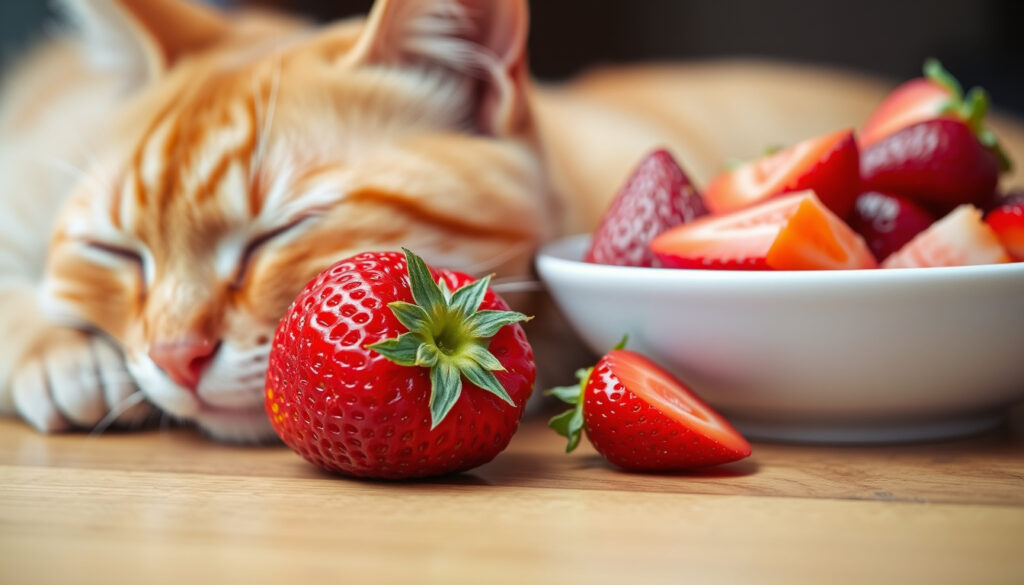
Can Cats Eat Strawberries – Safety, Risks & Serving Guide
A bright red strawberry dangled in front of a cat’s nose is a classic photo opportunity, but many cat owners pause before offering one. The question of whether cats can eat strawberries is common enough that veterinary clinics and pet nutrition brands have addressed it extensively. The short answer is yes, adult cats can consume small amounts of plain strawberry flesh without immediate harm. However, details about which parts are safe, how much is too much, and what forms to avoid matter a great deal.
Strawberries are listed as non-toxic to cats by the ASPCA, which puts them in the “generally safe” category alongside many other fruits. Yet because cats are obligate carnivores, their digestive systems process meat far more efficiently than plant matter. A strawberry offers no essential nutrients for a cat, and the natural sugars it contains can cause problems when fed too often or in large pieces. Understanding the difference between “non-toxic” and “nutritionally beneficial” is the first step toward responsible treat-giving.
Can Cats Eat Strawberries? The Short Answer
Fresh, ripe strawberries are safe for most adult cats when offered occasionally in tiny, plain pieces. The fruit itself contains no compounds that are poisonous to felines. The real concerns revolve around preparation, portion size, and the specific parts of the strawberry you serve.
Safe to Eat
Fresh, plain strawberries are non-toxic to cats in small amounts.
Remove Leaves & Stems
Leaves and stems are choking hazards and may cause digestive upset.
No Added Sugar or Dairy
Avoid sugar, yogurt, milk, or other additives—they can harm cats.
Kittens: Caution Required
Kittens have sensitive stomachs; consult a vet before offering strawberries.
The following insights summarize what veterinary sources consistently advise about strawberries and feline health.
- Strawberries are high in natural sugar and low in protein, offering no nutritional benefit to obligate carnivores.
- Cats lack sweet taste receptors, so they may not be interested in strawberries at all.
- The main risk is not toxicity but choking, digestive upset from leaves, or sugar overload.
- Moderation is key: one small strawberry per serving, cut into pieces, and only as an occasional treat.
- Treats of any kind should account for no more than 10 percent of a cat’s daily caloric intake.
- Processed strawberry products often contain dairy, sugar, or artificial sweeteners that are unsafe for cats.
| Attribute | Value |
|---|---|
| Toxicity | Non-toxic to cats (fruit flesh only) |
| Safe Portion | 1 small strawberry per 10 lbs of body weight, max twice a week |
| Unsafe Parts | Leaves, stems, and caps (choking hazard, digestive irritant) |
| Nutritional Info (per medium strawberry) | ~4 calories, 1 g sugar, 0.2 g fiber |
| Best Way to Serve | Washed, hulled, chopped into small pieces, plain |
| Frequency | Occasional treat only, not part of daily diet |
| Risks of Overfeeding | Weight gain, diarrhea, digestive upset |
Are Strawberries Toxic to Cats?
No, strawberry flesh is not toxic. The ASPCA lists strawberry as non-toxic to cats, and multiple veterinary sources confirm this. The word “non-toxic” does not mean the fruit is beneficial, only that it will not cause poisoning. A cat that nibbles a piece of ripe strawberry is unlikely to experience anything more than possible mild stomach upset if the portion is too large.
Can Cats Eat Strawberry Leaves and Stems?
The leaves are not toxic either, but they are not harmless. According to Hill’s Pet Nutrition, the leaves can be a choking hazard and the stem may cause digestive irritation or even an obstruction if swallowed whole. Pumpkin Pet Care notes that while the green parts are not poisonous, they offer no benefit and should always be removed before serving. Petfinder echoes this advice, stating that stems pose a choking risk and can lead to digestive trouble.
How Many Strawberries Can a Cat Eat Safely?
Portion control is the most practical consideration when feeding strawberries to a cat. Veterinary sources agree that treats should make up no more than 10 percent of a cat’s daily calories, and a single medium strawberry contains roughly 4 calories. For a ten-pound cat, one small strawberry—cut into several tiny pieces—is a reasonable serving. Chewy’s veterinary team recommends keeping servings small and infrequent.
A good rule of thumb: offer no more than one or two tiny pieces of strawberry at a time, and only once or twice per week. This keeps sugar intake low and reduces the chance of diarrhea or refusal of regular cat food.
Can Cats Eat Strawberries Every Day?
Daily feeding is not recommended. Strawberries contain natural sugars that can contribute to weight gain and disrupt a cat’s balanced nutrition if offered too often. Glenwood Pet Hospital advises that strawberries should be an occasional novelty, not a dietary staple. Hill’s Pet Nutrition also states that daily servings increase the risk of digestive upset and may cause a cat to refuse its regular food.
What Happens If a Cat Eats Too Many Strawberries?
Overfeeding can lead to mild diarrhea, vomiting, or general gastrointestinal discomfort. The sugar content, though natural, can also contribute to long-term weight issues if repeated frequently. In most cases, a single overindulgence resolves on its own, but persistent symptoms warrant a call to the veterinarian. No reports indicate that strawberries cause severe poisoning, even when eaten in excess, but the digestive consequences are unpleasant for the cat and the owner.
Can Kittens Eat Strawberries?
Kittens have more sensitive digestive systems than adult cats, and veterinary sources advise extra caution. The general consensus is that very young kittens should not be given strawberries at all, and older kittens should only try them after consulting a veterinarian.
At What Age Can Kittens Eat Strawberries?
Hill’s Pet Nutrition recommends avoiding strawberries for young kittens entirely. No universal age threshold exists, but most sources suggest waiting until a kitten is at least several months old and fully weaned onto a solid, balanced diet. Pumpkin Pet Care advises owners to check with their vet before introducing any new food, including fruit, to a kitten’s diet.
Are Strawberries Safe for Kittens?
The safety depends on the individual kitten’s age, health, and digestive maturity. While the fruit itself is non-toxic, a kitten’s stomach may react poorly to the sugar and fiber. Symptoms such as loose stool or mild vomiting are more likely in kittens than in adult cats. Starting with a piece no larger than a pea is a conservative approach, but only after veterinary approval.
Can Cats Eat Strawberries With Sugar, Yogurt, or Milk?
Plain strawberries are one thing, but the moment you add other ingredients, the safety profile changes. Processed strawberry products often contain substances that are harmful to cats, including dairy, refined sugar, and artificial sweeteners.
Can Cats Eat Strawberries with Sugar?
No. Added sugar provides empty calories and can contribute to obesity, dental problems, and digestive upset in cats. Strawberries already contain natural sugar, so sprinkling on extra is unnecessary and potentially harmful. Hill’s Pet Nutrition specifically advises against sweetened strawberries.
Can Cats Eat Strawberry Yogurt?
Strawberry yogurt is not recommended. Most yogurts contain dairy, which many adult cats cannot digest properly because they are lactose intolerant. Additionally, fruit yogurts often have high sugar content and may include artificial sweeteners such as xylitol, which is toxic to cats. Pumpkin Pet Care explicitly warns against strawberry yogurt, ice cream, jam, syrup, and chocolate-covered strawberries.
Plain, unsweetened yogurt in tiny amounts is sometimes tolerated by cats, but strawberry-flavored yogurt adds sugar and often artificial ingredients. Stick to plain fresh fruit if you want to offer a treat, and skip the dairy aisle entirely.
Can Cats Have Strawberry Milk?
Strawberry milk is not safe. Milk itself is hard for adult cats to digest because they lose the enzyme lactase after weaning. Combining milk with strawberry syrup or sweetened powder adds sugar and artificial flavors that offer no nutritional value and can cause gastrointestinal distress. Hill’s Pet Nutrition and Pumpkin Pet Care both caution against milk-based strawberry treats for this reason.
Strawberry jam, jelly, syrup, ice cream, yogurt, chocolate-covered strawberries, and any sugar-free strawberry products containing xylitol should never be given to cats. These items pose risks ranging from digestive upset to severe toxicity.
What Other Fruits Can Cats Eat?
Strawberries are not the only fruit that cats can eat in small amounts, but not all fruits are safe. Knowing which ones to offer and which to avoid helps owners make informed choices.
Can Cats Eat Blueberries?
Yes, blueberries are safe for cats in moderation. They are small, low in calories, and non-toxic. Chewy lists blueberries alongside strawberries as a cat-safe fruit, provided they are served plain and cut in half to prevent choking.
Can Cats Eat Watermelon?
Watermelon flesh is safe for cats, as long as it is seedless or the seeds are removed. The rind should not be offered, as it is tough to digest. Purina includes watermelon in its list of cat-safe fruits when served in small, plain pieces.
What Fruits Are Toxic to Cats?
Several common fruits are toxic to cats and must be avoided entirely. Grapes and raisins can cause kidney failure. Cherries contain cyanide compounds in their pits. Citrus fruits like oranges, lemons, and limes can cause digestive upset. Avocados contain persin, which can be harmful. Unripe tomatoes are also considered unsafe. Chewy and Purina both provide detailed lists of fruits to avoid.
Are Strawberries Safe for Cats? What We Know and What Remains Unclear
Veterinary sources are consistent on several points, but some questions remain open, particularly regarding individual cats with health conditions.
| Established Information | Information That Remains Unclear |
|---|---|
| Strawberry flesh is not toxic to cats. | Individual cats may have allergies or sensitivities to strawberries. |
| Leaves and stems are not toxic but can cause digestive issues. | Effects on cats with diabetes or kidney disease are not well documented. |
| Added sugar, dairy, and artificial sweeteners are harmful. | No universal guideline exists for kittens based on age or weight. |
| Cats do not need fruit in their diet. | Long-term effects of occasional strawberry feeding are not studied. |
Why Do Cats and Strawberries Make an Unlikely Pair?
Cats are obligate carnivores, meaning their digestive systems evolved to process meat, not plant matter. Unlike humans and some other mammals, cats lack functional sweet taste receptors, so the flavor of a ripe strawberry is largely lost on them. The appeal of feeding strawberries often comes from the owner’s desire to share a treat, not from the cat’s nutritional needs or preferences.
The top veterinary sources consistently agree that strawberries are safe in moderation, but many omit details about leaves, stems, and processed forms. This article fills those gaps by addressing specific user questions about strawberry parts, added ingredients, and comparisons to other fruits. The result is a more complete picture for owners who want to make informed decisions based on facts rather than assumptions.
What Do Veterinary Sources Say About Cats Eating Strawberries?
Multiple veterinary and pet nutrition sources have addressed this question directly. Their statements align on the core message: plain strawberries are safe in small amounts, but preparation matters.
“Strawberries are non-toxic to cats. With this in mind, cats can eat strawberries.”
— Petfinder
“The short answer is yes, cats can eat strawberries in small amounts. But while they aren’t toxic, they’re also not exactly a feline superfood.”
— PetMD
“The short answer is yes, many adult cats can safely enjoy a small amount of strawberries without any adverse effects.”
— Hill’s Pet Nutrition
So, Can Cats Eat Strawberries? The Bottom Line
Yes, most adult cats can eat a small piece of plain, ripe strawberry without harm. Remove the leaves and stem, wash the fruit, cut it into tiny pieces, and offer it only as an occasional treat. Strawberries provide no essential nutrients for cats, and the natural sugar content limits how often they should be given. For a more detailed look at other safe foods, see the Complete Guide to Safe Fruits and Vegetables for Cats. And always remember that a cat’s primary diet should consist of high-quality protein, not fruit.
Frequently Asked Questions About Cats and Strawberries
Can cats eat strawberries and blueberries together?
Yes, both are safe in small amounts, but avoid mixing if your cat has a sensitive stomach. Introduce one fruit at a time.
Can cats eat frozen strawberries?
Yes, plain frozen strawberries are safe. Thaw slightly and cut into small pieces to prevent choking.
What if my cat eats a strawberry leaf?
A small leaf likely won’t cause harm, but may cause mild vomiting or diarrhea. Monitor your cat and call a vet if symptoms persist.
Can cats eat strawberry jam?
No. Jam contains high sugar and often preservatives that are unhealthy for cats. Stick to fresh fruit.
Do cats even like strawberries?
Most cats are indifferent because they cannot taste sweetness. Some may enjoy the texture or novelty, but don’t expect a strong reaction.
Can cats eat strawberry leaves?
The leaves are not toxic but can cause choking or digestive irritation. Remove them before offering the fruit.
Are strawberries good for cats?
They are not harmful in small amounts, but they offer no nutritional benefit. Cats get everything they need from meat-based diets.
More related posts
 London North Eastern Railway – Essential Guide for Travellers
 Law & Order: SVU Episodes – Complete Guide to All 27 Seasons
 Amàre Beach Hotel Ibiza – Reviews, Prices & 2025 Guide
 Aisling Bea – Biography, Partner, Movies and Full Career Guide
 Bowel Cancer Survival Rate – Guide by Stage Age and Treatment
 Jeremy Doku Biography Career Stats and Personal Life
 Shefali Jariwala – Kaanta Laga Star Dies at 42
 Bernard Hill – Cause of Death, Iconic Roles, and Oscar Record