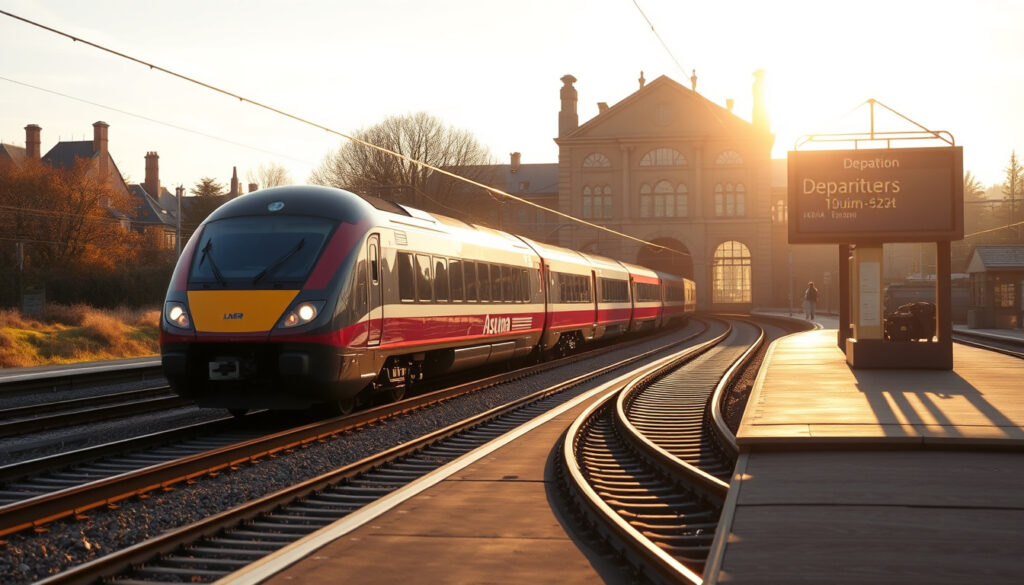
London North Eastern Railway – Essential Guide for Travellers
For millions of passengers traveling between London and the North of England or Scotland, the London North Eastern Railway (LNER) is the primary operator on the East Coast Main Line. Since taking over the franchise in 2018, LNER has established itself as a state-owned railway with a focus on digital service, modern trains, and a straightforward compensation system. This guide provides a comprehensive overview of LNER, covering everything from how to claim Delay Repay to the operator’s history and ownership structure.
LNER operates high-speed services from London Kings Cross to destinations including Edinburgh, Leeds, York, and Newcastle. Its fleet of Azuma trains, introduced in 2019, now handles the bulk of passenger journeys on the route. Understanding how LNER works — from ticketing to customer service — can save travelers both time and money.
How Do I Claim a Delay Repay from LNER?
London North Eastern Railway (LNER)
East Coast Main Line (London Kings Cross to Edinburgh/Leeds/York/Newcastle)
Available from 30 min delay — claim online or via email
2018 (replaced Virgin Trains East Coast) — predecessors include GNER (1996–2007)
LNER offers compensation for delays of 30 minutes or more at your destination. The process is designed to be simpler than many other UK rail operators, with a dedicated One-Click system for passengers who book directly.
- LNER is the sole operator on the East Coast Main Line, handling millions of passengers annually.
- Zero booking fees are charged when tickets are purchased directly via lner.co.uk.
- Delay Repay compensation is tiered: 30–59 minutes late earns a 25% refund; 60–119 minutes late earns 100%; delays of 120+ minutes also earn 100%.
- LNER is state-owned through the Department for Transport (DfT) since 2018 — it is not a private company.
- The brand ‘LNER’ revives the historic London & North Eastern Railway name from 1923–1947, but is not a direct continuation of GNER.
| Field | Details |
|---|---|
| Full Name | London North Eastern Railway (LNER) |
| Operator | LNER (East Coast) Limited, owned by DfT OLR Holdings Limited |
| Main Station | London Kings Cross |
| Key Destinations | Edinburgh, Glasgow, Leeds, York, Newcastle, Aberdeen, Inverness |
| Fleet | Azuma Class 800/801 bi-mode trains |
| Delay Repay Threshold | 30 minutes (25% refund), 60+ min (100% refund) |
| Booking Fees Online | £0 on official LNER site |
| Companies House Registration No. | 11232368 (LNER (East Coast) Trains Ltd) |
| Parent Organisation | DfT OLR Holdings Limited (Department for Transport) |
| Predecessors | GNER (1996–2007), National Express East Coast (2007–2009), East Coast (2009–2015), Virgin Trains East Coast (2015–2018) |
One-Click Delay Repay
For passengers who book directly through the LNER website or app and opt-in during booking, the One-Click system automates most of the process. Within 30 minutes of a qualifying delay, an email with a claim link is sent. Verification takes roughly 30 minutes, and payment typically arrives in 3–5 business days. Claims can be tracked through the My Account section, and there is an option to donate compensation to the CALM charity.
Manual Claims
Travelers who did not opt in can still submit a manual claim via email or the LNER Delay Repay page. The email method is particularly praised by user forums for its simplicity — no portal or account is required. Claims should include the journey date, departure and arrival stations, scheduled departure time, delay length, ticket type and cost, and a photo of the ticket or booking confirmation. Response time is 5–10 working days, with refunds returned to the original payment method. Frequent commuters can batch-claim by sending a monthly email with a single ticket photo for season tickets.
Claims must be submitted within 28 days of travel, though LNER recommends doing so within 48 hours for faster processing. For cancellations, no compensation is given if you take an earlier, undisrupted train. If you abandon your journey, you can claim a refund for the unused ticket within 28 days of its expiry date.
What Is the Difference Between London North Eastern Railway and Great North Eastern Railway?
The distinction between LNER and Great North Eastern Railway (GNER) is a common source of confusion for travelers and researchers alike. GNER was a private franchise holder that operated the East Coast Main Line from 1996 to 2007. It was known for its premium service, but financial difficulties forced it to hand back the franchise. LNER, by contrast, is a state-owned operator that took over in 2018 after the collapse of the Virgin Trains East Coast franchise. The two entities are not the same company, and they operate under entirely different ownership models.
When did LNER replace GNER?
GNER ceased operations in 2007, when the franchise was awarded to National Express East Coast. After National Express handed back the franchise in 2009, the line was directly operated by the Department for Transport under the name East Coast. This public-sector operation lasted until 2015, when the franchise was again awarded to Virgin Trains East Coast. That arrangement ended in 2018, and the DfT resumed control, launching the LNER brand. So while GNER and LNER both operated the same route, there were other operators in between.
Is GNER still operating?
No. GNER no longer exists as a train operating company. The brand is sometimes remembered for its distinctive livery and service standards, but all East Coast Main Line services are now run by LNER. For historical context, LNER’s name is a revival of the pre-nationalisation London & North Eastern Railway (1923–1947), but it is not a direct continuation of that historic company or of GNER.
From a legal standpoint, LNER is not a private company but a public sector operator. Its parent entity is DfT OLR Holdings Limited, a company wholly owned by the Department for Transport. The registered company number at Companies House is 11232368 (LNER (East Coast) Trains Ltd).
How Do I Contact LNER Customer Service?
LNER does not publish a general customer service phone number in its standard public-facing documentation. Instead, the company directs most queries through its online channels. The primary method for service-related queries is the LNER Support page, which links to the My Account portal and the Delay Repay form. For Delay Repay claims specifically, email communication is the recommended route — customers can send their claim details directly to customer relations without needing to open an account. If a customer is unsatisfied with the outcome of a claim, the next step is to appeal to the Rail Ombudsman.
For public liability claims, LNER directs customers to the Gallagher Bassett portal using the claim ID D00019. For general inquiries about onboard services, station facilities, or ticketing, the most efficient method is to use the live chat feature on the LNER website or to send a message via social media. The Wikipedia entry for London North Eastern Railway also provides a useful overview of contact methods and service history.
What Routes Does LNER Serve from London Kings Cross?
As the primary operator on the East Coast Main Line, LNER connects London Kings Cross with major cities across the North of England and Scotland. The key route is the London to Edinburgh service, with a typical journey time of around 4.5 hours. Other major destinations include Leeds, York, Newcastle, Glasgow (via connections or direct services), Aberdeen, and Inverness. Services run approximately hourly on the main London–Edinburgh corridor, with additional trains during peak times.
How long does LNER take from London to Edinburgh?
The fastest LNER services from London Kings Cross to Edinburgh Waverley complete the journey in roughly 4 hours and 20 minutes to 4 hours and 40 minutes, depending on the number of intermediate stops. Slower services, which call at more stations such as Peterborough, Doncaster, and York, can take up to 5 hours.
Does LNER go to York?
Yes. York is one of the main intermediate stops on the East Coast Main Line. LNER trains from London to Edinburgh, Newcastle, and Scotland all serve York station. The journey from London Kings Cross to York typically takes around 1 hour and 50 minutes to 2 hours.
What Is LNER’s Companies House Registration and Ownership Structure?
LNER is not a private company in the traditional sense. It operates as a public sector company under the control of the Department for Transport. The legal entity registered at Companies House is LNER (East Coast) Trains Ltd, with the registration number 11232368. The company’s ultimate parent is DfT OLR Holdings Limited, which itself is wholly owned by the Secretary of State for Transport. This structure means LNER is effectively state-owned, a status it has held since June 2018 when the DfT took direct control after the Stagecoach/Virgin joint venture failed to meet its contractual payments.
Updates to ownership, directorship, or registered address can be tracked through the Companies House registration page. The company’s status may change as part of the UK government’s broader rail reform plans, which include the creation of Great British Railways.
Are There LNER Train Disruptions Today?
Real-time disruption information for LNER services is best obtained directly from the operator’s website or app, or from National Rail Enquiries. LNER provides a live disruption feed on its homepage, covering planned engineering works, cancellations, and delays. For passengers facing a delay of 30 minutes or more, the Delay Repay process applies regardless of whether the disruption was planned or unexpected. During major engineering works, LNER often arranges alternative travel or replacement bus services. The National Rail LNER operator page is a reliable source for up-to-date service status and planned engineering work calendars.
LNER History — From GNER to Today
- 1996 — Great North Eastern Railway (GNER) granted franchise, operates East Coast Main Line.
- 2007 — GNER loses franchise following financial difficulties; replaced by National Express East Coast.
- 2009 — National Express hands back franchise; East Coast (directly operated by DfT) takes over.
- 2015 — Franchise awarded to Virgin Trains East Coast (Stagecoach/Virgin joint venture).
- 2018 — Virgin Trains East Coast fails to meet contractual payments; DfT takes over, launches LNER brand.
- 2019 — Azuma trains introduced, replacing the older InterCity 225 fleet.
- 2021 — LNER becomes a public sector operator under DfT OLR Holdings.
- 2024–2025 — LNER continues operations with emphasis on digital improvements and Net Zero targets.
The long-term franchise status of LNER remains contingent on UK rail reform. The Great British Railways structure, if implemented, may alter LNER’s operating model. Specific processing times for Delay Repay payments can also shift — current estimates are based on the most recent LNER documentation.
What Is Confirmed and What Remains Unclear About LNER?
| Established Information | Information That Remains Unclear |
|---|---|
| LNER is the current operator of the East Coast Main Line since 2018. | Long-term franchise status may shift with UK rail reform — verify with latest DfT announcements. |
| LNER is wholly owned by DfT OLR Holdings Limited. | Specific Companies House details (registered number may refer to multiple related entities). |
| Delay Repay claims must be submitted online within 28 days of travel. | Exact payment processing timelines may change. |
| LNER does not charge booking fees on their own website. | Onboard cafe bar menu and pricing are not publicly detailed. |
What Context Explains LNER’s Unique Position in UK Rail?
LNER occupies a unique position as both a heritage brand and a modern state-owned operator. The revival of the pre-1948 LNER name draws on a sense of tradition, while the operational reality is that the company is entirely DfT-controlled. This duality often leads to confusion with GNER, which was a private franchise holder with a different management structure. For travelers, understanding this distinction is useful when verifying who to contact for complaints or when checking the operator’s legal standing. For investors and policy watchers, LNER’s status reflects the UK government’s broader approach to rail franchising and the trend toward public-sector operation.
Where Does the Information Come From?
“LNER offers one of the simplest Delay Repay processes in the UK rail network.”
— LNER Official Website
“LNER is directly operated by the Department for Transport since June 2018 (nationalized after Stagecoach/Virgin collapse).”
— Aggregated from LNER official pages and rail history forums
“LNER is the current operator on the East Coast Main Line, formed post-2018 franchise collapse.”
— DelayRepay.uk and LNER site
What Is the Most Important Thing to Remember About LNER?
London North Eastern Railway is a state-owned train operating company running high-speed services on the East Coast Main Line. It is not a private business like GNER, and it charges no booking fees on its own website. For passengers, the key takeaway is to book directly at LNER routes on the East Coast Main Line to access the easiest Delay Repay process and save on fees. For questions about delays, cancellations, or refunds, the online claim system is the fastest route to resolution.
Frequently Asked Questions
Does LNER have first class?
Yes, LNER offers first class on all Azuma and InterCity trains. First class includes larger seats, complimentary food and drinks, and quieter carriages.
How do I get LNER seat reservations?
Seat reservations are included free with LNER Advance tickets and can be added to Anytime/Off-Peak tickets online or via the LNER app up until departure.
What is LNER’s baggage policy?
LNER allows three bags per passenger (2 large, 1 hand luggage) free of charge, as long as they can be stored safely in luggage racks or overhead shelves.
Does LNER charge booking fees?
No. LNER charges zero booking fees when you book directly via lner.co.uk — a key difference from many third-party platforms.
Can I use LNER tickets on other train companies?
Most LNER tickets are valid only on LNER services unless specifically noted (e.g., ‘any permitted’ tickets that allow routeing via other operators).
How do I check LNER timetables?
Visit lner.co.uk or National Rail Enquiries — both provide up-to-date timetables for all LNER routes.
More related posts
 Georgia Toffolo – Biography, Books, and 2025 Update
 Ha The Pope Died – Pope Franci Die at 88 on Ea ter Monday
 Cast of Modern Family – Complete Guide to Actors and Characters
 Green Man Festival 2025 – Dates, Lineup, Tickets Guide
 Sea of Stars Maldives – Where, When and How to Visit Vaadhoo
 Nick Kroll – Biography, Wife, Net Worth and Full Career Guide
 Millie Court – Age, Love Island Win and Relationship Timeline
 Khamzat Chimaev Next Fight – UFC 328 Vs Strickland Details