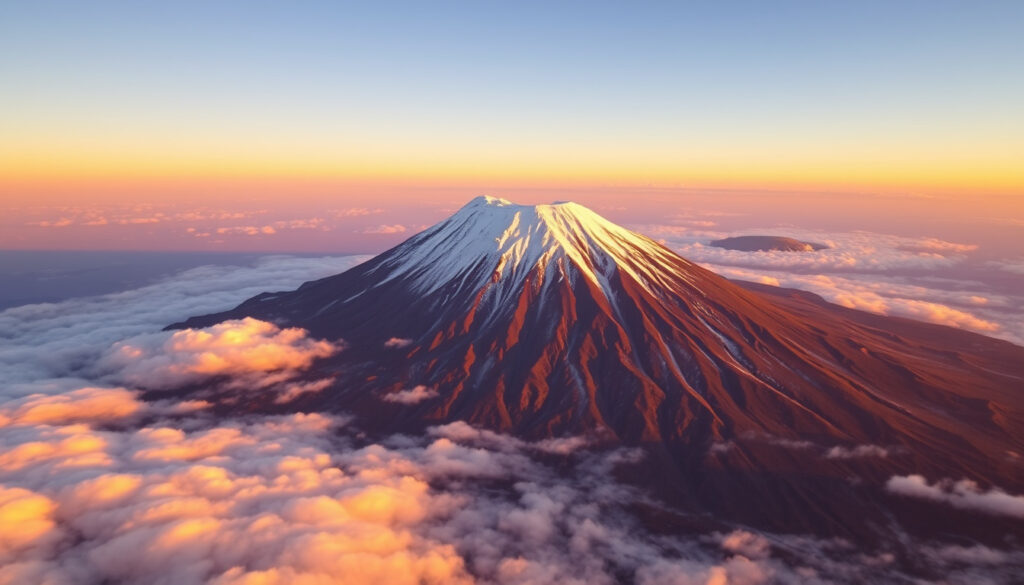
Mt Kilimanjaro – Facts about height cost routes and eruption
How Tall Is Mount Kilimanjaro and Where Is It Located?
The most frequently asked questions about this peak centre on its exact dimensions and location. The answers are well-established by multiple authoritative sources.
- Height: 5,895 m (19,341 ft)
- Location: Tanzania, East Africa
- Type: Stratovolcano (dormant)
- Climbing Duration: 5 to 9 days (route dependent)
Kilimanjaro is the highest free-standing mountain on Earth, meaning it is not part of a mountain range. Its peak, Uhuru Point, sits atop the Kibo cone at an elevation of 5,895 metres (19,341 feet) above sea level. The mountain is located in the Kilimanjaro Region of northern Tanzania, close to the border with Kenya and near the towns of Moshi and Arusha.
- Kilimanjaro is the highest mountain in Africa.
- It is a free-standing mountain, not part of a range.
- It has three volcanic cones: Kibo (highest), Mawenzi, and Shira.
- Only Kibo is dormant; the other cones are considered extinct.
- Its height makes it a major target for trekkers worldwide.
| Attribute | Value |
|---|---|
| Height (meters) | 5,895 m |
| Height (feet) | 19,341 ft |
| Country | Tanzania |
| Type | Stratovolcano (dormant) |
| Last Eruption | ~360,000 years ago |
| Closest City | Moshi / Arusha |
| Number of Routes | 7 major routes |
| Average Cost | $2,500 – $5,000 |
| Typical Duration | 6–9 days |
The location in Tanzania places it within a well-established national park and a UNESCO World Heritage site, drawing visitors for both its natural significance and its status as a premier trekking destination. For those seeking other remarkable locations, consider our guide on Tourist Attractions Near Me.
When Did Mount Kilimanjaro Last Erupt? Is It Still Active?
A deep uncertainty often surrounds the volcanic nature of Kilimanjaro. Many wonder if it is an active volcano and whether it poses any risk to climbers.
The volcano is composed of three distinct cones: Kibo, Mawenzi, and Shira. The last major eruption from Kibo occurred approximately 360,000 years ago. While some sources point to more recent volcanic activity, this is limited to fumaroles or gas release roughly 200,000 years ago. There have been no historical eruptions recorded.
Kibo is classified as dormant, not extinct. This distinction is important. A dormant volcano has not erupted in recent history but retains the potential to do so in the future. However, the scientific consensus indicates that an eruption is not considered likely to happen soon. Small-scale steam vents or fumaroles on Kibo do create some debate about the possibility of minor future activity, but this remains a speculative area.
Were There Any Recent Eruptions?
Claims of an eruption in 2018 are not supported by any of the established geological records. No eruption occurred in 2018. The mountain’s last significant volcanic event remains firmly placed hundreds of thousands of years in the past.
How Much Does It Cost to Climb Mount Kilimanjaro?
Planning a climb requires a budget, but nailing down an exact figure is challenging because the price varies significantly based on several factors. No single fixed cost exists for the entire experience.
The cost of climbing Kilimanjaro can vary widely by route, number of days, operator quality, park fees, guide and porter wages, and whether the climb is private or joined. Budget estimates typically range from $1,500 to $6,000 or more.
A general estimate places the average cost for a typical 6- to 9-day climb between $2,500 and $5,000. Shorter, budget-friendly routes on the lower end of that spectrum are available, while longer itineraries with more luxurious amenities and higher safety standards push the price much higher. Factors influencing the final price include the specific route chosen, the duration of the trek, the reputation of the tour operator, included services (like gear rental and meals), and park entry fees. According to Wikipedia, the mountain’s status as a major tourist destination drives these logistical considerations.
Which Route Should I Choose? How Long Is the Hike?
Having a clear understanding of the main routes helps trekkers make an informed choice. The selection often balances scenery, difficulty, duration, and success rates.
The major routes include Marangu, Machame, Lemosho, Rongai, and others. It is commonly noted that there are six or seven major trekking routes. The character of each route differs significantly:
- Marangu: Often described as the easiest route, offering hut accommodation for climbers.
- Machame: Known for being more scenic but also more challenging than Marangu.
- Lemosho: A scenic route often associated with higher summit success rates due to its longer duration and gradual ascent. Detailed route comparisons are available from Climbing Kilimanjaro.
- Rongai: A quieter, less strenuous route that approaches the mountain from the north.
The duration of the hike is directly tied to the route and its length. A minimum of five nights is often recommended to improve acclimatization. The shortest routes can be completed in about 5 days, while the longest and most recommended itineraries for high success rates take 8 to 9 days. The total hiking distance to the summit and back varies by route, but is generally between 35 and 50 miles.
Is Kilimanjaro Harder to Climb Than K2? (And Other Mountain Comparisons)
A common point of confusion involves comparing Kilimanjaro to other famous peaks, most notably K2. The two mountains are not the same and present completely different challenges.
Kilimanjaro is a trekking mountain rather than a technical climbing peak. It generally does not require the use of ropes or advanced mountaineering skills. The primary challenge is altitude. In contrast, K2, located in the Karakoram range, is a technical climbing peak known for its extreme difficulty and high fatality rate.
The comparison between Kilimanjaro and K2 is a myth. They are fundamentally different objectives. Kilimanjaro is a high-altitude trek; K2 is a demanding mountaineering expedition. Other comparisons, such as with Mount Kinabalu, also highlight differences in height, route character, and required physical preparation.
Beginner’s Guide to Climbing Kilimanjaro: How to Prepare and What to Expect
For those attempting the climb for the first time, preparation is key. The most important factor is managing the impact of high altitude. Choosing a longer itinerary rather than a rushed one is the single most critical decision a beginner can make, as it significantly improves acclimatization.
Hiring a licensed guide and using porters is standard practice and is strongly recommended for both safety and logistical support. The summit success rate provides a useful benchmark; approximately 25,000 climbers attempt the summit each year, and around two-thirds succeed. Success rates can vary, with shorter 5-day routes seeing success rates around 50%, while longer 8- or 9-day routes can achieve rates above 90% due to better acclimatization. Resources from Ian Taylor Trekking and Much Better Adventures provide further guidance on planning a successful trip.
Prepare for altitude sickness by ensuring a slow ascent. Learn to recognize its symptoms. Pack for all weather conditions, from equatorial heat at the base to extreme cold at the summit. Practicing hiking with a weighted pack is beneficial.
Mount Kilimanjaro: Geological and Climbing Timeline
The history of Kilimanjaro spans millennia, from its volcanic formation to its modern status as a world-famous trek.
- ~2.5 million years ago: Volcanic cone formation begins.
- ~360,000 years ago: The last major eruption of Kibo occurs.
- 1889: First recorded summit by Hans Meyer and Ludwig Purtscheller.
- 1973: Kilimanjaro National Park is established.
- 1987: Designated a UNESCO World Heritage Site.
- 2020–2025: Increased focus on glacial retreat due to climate change.
- 2025: Modern climbing season; high-altitude safety standards are updated.
Established Facts vs. Unclear Information
While much is known about Kilimanjaro, some information remains uncertain or varies by source. Operators like Alpine Ascents offer empirical data on success rates, but variations persist.
- Height of 5,895 m is the widely accepted elevation.
- Kilimanjaro is located in Tanzania, East Africa.
- Last major eruption occurred ~360,000 years ago.
- Kibo cone is dormant but not extinct.
- Small-scale steam vents or fumaroles on Kibo create debate about minor future activity.
- Exact cost of climbing varies significantly by season and operator; no single fixed price.
- Summit success rates vary by source due to self-reporting biases.
The Context of Mount Kilimanjaro
Mount Kilimanjaro holds dual importance. It is Africa’s highest peak and a major geographic landmark, and it is a bucket-list trek that attracts tens of thousands of climbers annually. Its volcanic history is often misunderstood; it is a dormant stratovolcano, not an extinct one. Furthermore, its cost and difficulty are frequently conflated with those of other iconic mountains like K2. This analysis clarifies those facts and provides a practical planning framework.
Key Sources and Citations
The information presented here draws from several reputable sources. The height, location, and volcanic history are well-documented by Wikipedia and other scientific compilations. Route comparisons, costs, and success rates are regularly detailed by expert guides and commercial outfitters such as Climbing Kilimanjaro, Ian Taylor Trekking, Much Better Adventures, and Alpine Ascents. These sources provide both factual data and practical, first-hand experience.
“Kilimanjaro is the highest mountain in Africa and is a dormant stratovolcano.”
— Wikipedia
“A longer itinerary is the single most important factor for a successful summit.”
— Ian Taylor Trekking
Summary: What You Need to Know
Mount Kilimanjaro is a dormant stratovolcano in Tanzania, standing at 5,895 m. Its last major eruption was hundreds of thousands of years ago. Climbing it is a high-altitude trek, not a technical climb, with costs ranging from $1,500 to over $6,000 depending on route and operator. Success rates improve dramatically with longer itineraries. For real-time updates on climbing fees, route status, or glacier monitoring, refer to official Tanzania National Parks (TANAPA) or UNESCO reports. No ongoing eruption risk is expected. For more travel inspiration, plan your next outdoor adventure with the Camping and Caravan Club.
Frequently Asked Questions
Is Mount Kilimanjaro the tallest mountain in the world?
No. While it is the tallest free-standing mountain, it is not the tallest in the world. Mount Everest is the highest mountain above sea level.
Can beginners climb Mount Kilimanjaro?
Yes, it is accessible to beginners. It does not require technical climbing skills, but proper preparation for altitude is essential.
Is climbing Kilimanjaro dangerous?
The primary danger is altitude sickness. With proper acclimatization, a good guide, and a sensible itinerary, risks are managed.
Do I need a guide for Kilimanjaro?
Yes, it is required by law in Tanzania. All climbers must be accompanied by a licensed guide and porters.
What is the best month to climb Kilimanjaro?
The best times are during the dry seasons: January to March and June to October. These offer the most stable weather conditions.
More related posts
 Day 1 Chicken Pox Adults – Early Signs Before Rash
 Is All Purpose Flour the Same as Plain Flour – A Clear Guide
 KEFI Gold and Copper Share Price – Live Data and 2025-2030 Forecasts
 Poolbeg Pharma Share Price – Live POLB News and Forecast
 Bedec Multi Surface Paint – Coverage, Application and Reviews Guide
 Jaws James Bond – The Complete Guide to the Iconic Henchman
 Shefali Jariwala – Kaanta Laga Star Dies at 42
 Ray-Ban Meta Glasses – Features, Price, Review Guide