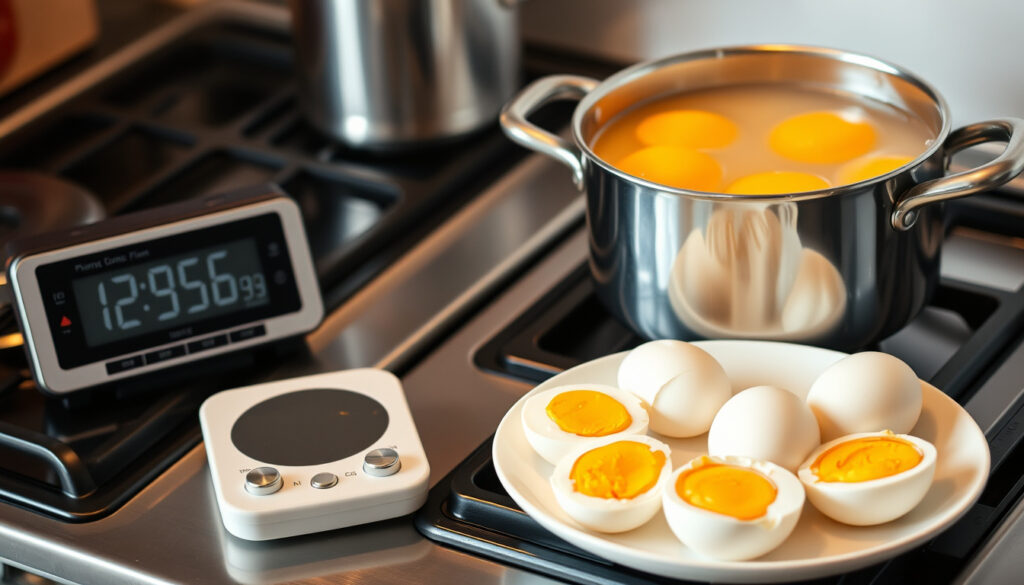
How to Boil Eggs – Perfect Times Without Cracks
Boiling eggs seems straightforward, yet achieving the perfect texture—runny, jammy, or fully set—requires understanding timing, temperature, and technique. This guide covers stovetop methods, precise cooking times, and practical tips to prevent cracking while ensuring consistent results every time.
Whether preparing a quick breakfast or meal-prepping for the week, the difference between a perfectly cooked egg and an overcooked one often comes down to minutes—and sometimes seconds. The good news is that mastering this skill requires minimal equipment and no special training.
Timing determines the final texture. Cooking times vary based on starting temperature, egg size, and altitude, but the chart below provides reliable starting points for large, fridge-cold eggs using the boiling water method.
Times listed assume large, refrigerator-cold eggs placed in already-boiling water. Extra-large eggs require an additional 1–2 minutes, while smaller eggs need about 1 minute less. High-altitude cooking (above 3,000 feet) adds roughly 1 minute per additional 1,000 feet due to the lower boiling point of water.
| Doneness | Time (minutes) | Yolk Texture | White Texture |
|—|—|—|—|
| Very Soft | 3–4 | Really runny, slightly set | Set but tender |
| Soft/Runny | 6 | Runny, silky | Soft, fully set |
| Jammy | 7 | Creamy and silky | Fully cooked, soft |
| Medium | 8–9 | Soft, jammy, firmer | Firmer, fully set |
| Hard | 10–11 | Creamy, firmly set | Firm |
| Firm Hard | 12+ | Fully firm (may become powdery if overcooked beyond 15 minutes) | Fully set |
Bring water to a full boil before adding eggs for the most predictable timing and reduced cracking risk. Fridge-cold eggs produce creamier yolks and are easier to peel than room-temperature eggs. An ice bath immediately after cooking stops the cooking process and makes shells release cleanly. Salt in the water raises the boiling point slightly and stabilizes temperature for more even cooking. Testing with one egg before cooking a full batch saves time and resources. Steaming reduces cooking time by 1–2 minutes compared to submersion boiling.
The stovetop remains the most accessible method for cooking hard boiled eggs. The process involves bringing water to a gentle boil, carefully lowering in cold eggs, and maintaining a steady simmer throughout cooking.
This approach offers the most consistent results. Begin by boiling 2 inches of salted water in a medium saucepan over medium-high heat. Once the water reaches a rolling boil, reduce the heat slightly to a gentle simmer and carefully lower in fridge-cold eggs one at a time using a large spoon. This method yields eggs with a consistent air cell structure, making them easier to peel afterward.
Placing eggs in cold water and then heating gradually reduces thermal shock, which lowers the chance of cracking. However, timing becomes less predictable because the clock starts only when the water begins to boil. Expect the total process to take approximately 3–5 minutes longer than the boiling water method.
Steaming offers a compromise between the two methods. Place 2 cups of water in a covered pot with a steamer basket, bring to a boil, add refrigerated large eggs, and steam covered. Runny eggs require 6–7 minutes, medium doneness takes 8–9 minutes, and fully set eggs need 12–14 minutes.
Shell cracks often result from thermal shock—the sudden temperature difference between the egg and its cooking environment. Preventing this requires attention to egg temperature, water temperature, and how eggs are handled during insertion.
Fridge-cold eggs contract slightly when heated gradually, which actually helps the shell grip the egg less tightly during cooking. This makes them easier to peel and reduces internal pressure that leads to cracks. Room-temperature eggs, by contrast, experience more dramatic expansion when submerged in hot water.
Lower eggs gently into boiling water using a spoon rather than dropping them. Avoid overcrowding—arrange eggs in a single layer with at least 2 inches of water coverage above them. Overcrowding causes eggs to knock against each other and the pot walls, increasing crack risk.
A gentle boil (medium-high heat with active but not violent bubbling) is preferable to a rolling boil. The violent churning of a full boil jostles eggs unnecessarily. Adding salt to the water raises its boiling point slightly and improves temperature stability throughout cooking.
Both methods work, but they suit different priorities. The choice depends on whether you value consistency and speed (boiling water) or reduced cracking risk and hands-off cooking (cold water).
This method excels for predictable timing. Eggs enter water that is already at a stable 100°C (212°F), and the timer begins immediately. The RecipeTin method specifically recommends bringing water to a boil first for this reason. Results are highly reproducible, making it ideal when cooking for a specific doneness level.
Starting with cold water means eggs heat gradually alongside the water. This approach minimizes thermal shock, which appeals to those concerned about cracking. However, the total cooking time becomes less predictable because it includes the time needed to bring the water to a boil.
Avoid using room-temperature eggs in a rapid boil. The combination of uneven heating and aggressive boiling creates the highest risk of shell fractures. If using room-temperature eggs, reduce the heat to a very gentle simmer and expect faster cooking times (approximately 8 minutes for a hard-boiled result from room temperature).
Relying solely on timing can lead to overcooked or undercooked results, especially when accounting for variables like stove power and egg size. Several methods help verify doneness.
Cracking open one egg provides the most direct assessment. A runny yolk flows easily, a jammy yolk holds its shape but remains soft and somewhat fluid, and a hard yolk sits firm throughout. This method removes all guesswork and is worth the sacrifice of one test egg.
A hard-boiled egg spins smoothly on a flat surface because its internal contents have fully solidified. A soft or runny egg wobbles during spinning due to the liquid yolk moving inside. This test works well for checking multiple eggs without destroying them.
Transferring cooked eggs to an ice bath halts the cooking process precisely. Without an ice bath, residual heat continues cooking the eggs even after removal from the stove, potentially pushing them from jammy to overcooked.
The path from raw egg to perfectly cooked result follows a clear sequence:
Prepare the ice bath — Fill a large bowl with 3–4 cups of ice and enough cold water to submerge eggs completely. Set this aside before starting to cook.
Bring water to boil — Place eggs in a single layer in a saucepan, add 2 inches of cold water, and stir in a teaspoon of salt. Heat over medium-high until water reaches a full boil.
Lower the heat — Reduce to medium or medium-low to achieve a gentle simmer rather than a violent boil.
Add eggs carefully — If starting with cold water, this step is already complete. If boiling water first, use a spoon to lower fridge-cold eggs one at a time.
Start the timer — Time from when eggs enter the water (boiling water method) or from when water returns to a boil (cold water method).
Transfer to ice bath — At the target time, immediately remove eggs using a slotted spoon and plunge into the prepared ice bath.
Peel and serve or store — After 5–10 minutes in the ice bath, eggs peel easily. Store unpeeled eggs in the refrigerator for up to one week.
Certain factors in egg boiling are well-established through culinary practice and food science. Others depend heavily on individual circumstances.
| Established Information | Variable Factors |
|—|—|
| Ice bath stops cooking immediately and improves peelability | Exact timing varies by stove power and pot material |
| Fridge-cold eggs peel more easily than room-temperature eggs | Altitude affects boiling point and required time |
| Salt stabilizes water temperature | Egg size (small vs. extra-large) requires timing adjustments |
| Gentle simmer reduces cracking better than violent boiling | Freshness affects peelability (older eggs peel more easily) |
| Single-layer arrangement prevents overcrowding damage | Specific yolk texture preferences vary by individual |
Egg proteins begin to coagulate at around 65°C (149°F) and set completely by 70°C (158°F). The gentle, even heat of a properly managed boil ensures proteins set uniformly, producing a smooth white and creamy yolk.
Thermal shock occurs when a cold egg encounters extreme, sudden heat. The shell contracts while the internal contents expand, creating pressure that fractures the shell or the membrane beneath it. Gradual heating (cold water method) avoids this, while careful insertion into already-hot water (boiling water method) achieves rapid heat distribution without shock.
The air pocket at the blunt end of the egg plays a role in both cracking and peeling. When heated rapidly, this pocket expands and can push against the shell. The USDA recommends proper egg handling to minimize food safety risks, noting that thoroughly cooking eggs until both white and yolk are firm provides protection against salmonella.
Culinary professionals and tested recipe sources generally favor the boiling water method for its consistency. The BBC Good Food guide notes that soft-boiled eggs typically require 5–7 minutes depending on size, while RecipeTin emphasizes bringing water to a boil first for predictable results.
“Bring water to a boil first, then carefully lower in the eggs. This method gives you complete control over cooking time and produces reliably peelable eggs.”
The Cook at Home Mom approach highlights that jammy eggs—cooked for exactly 7 minutes—offer a perfect middle ground between runny and hard, with a silky yolk that spreads beautifully on toast or in salads.
Even perfectly cooked eggs frustrate when the shell refuses to release cleanly. The ice bath method remains the gold standard for easy peeling. The rapid temperature drop causes the shell and inner membrane to contract at different rates, creating a gap between them.
For best results, crack the shell against a hard surface and roll the egg gently before peeling under cool running water. Older eggs peel more easily than very fresh ones because the air pocket has had more time to enlarge. If peeling proves difficult despite proper technique, older eggs from the back of the refrigerator often cooperate better.
Storage depends on whether the eggs are peeled. Unpeeled hard-boiled eggs keep in the refrigerator for up to one week in a covered container. Peeled eggs require an airtight container with a damp paper towel and last 2–3 days. Soft-boiled eggs are best consumed immediately, as their runny yolks make them unsuitable for extended storage.
Boiled eggs work beautifully in Chicken and Chorizo Pasta – Quick Recipes and Variations, grain bowls, potato salads, and deviled egg preparations. Their protein content also makes them a satisfying snack alongside other foods like the options explored in Gold Standard Whey Protein – 2025 Review and Nutrition Guide for those building balanced meals around protein sources.
How do I prevent green or grey rings around the yolk?
Overcooking causes a greenish-grey ring to form around the yolk from a reaction between iron and sulfur. Preventing this means removing eggs from heat promptly, using an ice bath immediately, and not cooking beyond 15 minutes even for very firm yolks.
Why do older eggs peel easier than fresh ones?
As eggs age, the air pocket at the blunt end enlarges through evaporation. This larger pocket creates more space between the shell and the egg white, allowing water to penetrate during boiling and making the shell release more cleanly.
Can I boil eggs in the microwave?
Microwaving eggs in their shells is not recommended due to uneven heating, which can cause the egg to explode. If microwaving is necessary, pierce the shell or membrane and use a lower power setting in a microwave-safe container with water.
How do I add flavor to boiled eggs?
Adding flavor works best after peeling. Sprinkle with everything bagel seasoning, drizzle with soy sauce, or mash with mayonnaise and mustard for egg salad. For a more infused result, simmer peeled hard-boiled eggs in seasoned broth for 15–20 minutes.
What is the float test and does it work for boiled eggs?
The float test checks whether a raw egg is fresh by seeing if it sinks or floats in water. A fresh egg sinks; an older egg floats due to its larger air pocket. This test is unreliable for determining whether a boiled egg is done or overcooked.
Why did my eggs crack during cooking?
Cracking usually results from thermal shock, overcrowding, or boiling too aggressively. Eggs placed directly from the refrigerator into boiling water experience sudden temperature changes. Overcrowding causes eggs to knock together. Violent boiling jostles eggs against each other and the pot.
How do I make perfect jammy eggs every time?
Use large, fridge-cold eggs. Bring water to a boil, reduce to a gentle simmer, carefully lower in the eggs, and cook for exactly 7 minutes. Immediately transfer to an ice bath for 5–10 minutes. This method produces a creamy, spreadable yolk surrounded by a fully set white.
More related posts
 Clare Calbraith – Biography, Movies, TV Shows and Personal Life
 How Old I David Attenborough – 100th Birthday, Family and Life
 How Long Do Spiders Live – Lifespan Facts for Every Species
 James Trafford – Age, Height, Career and Chelsea Rumours 2025
 Cast of the Bill – Complete Guide to Actors and Characters
 What Colours Can Cats See – Blues and Yellow-Greens Vivid
 Free Bus Pass Changes – Eligibility Rules and 2025 Updates
 Ricky Gervais Net Worth – $170M from The Office Empire