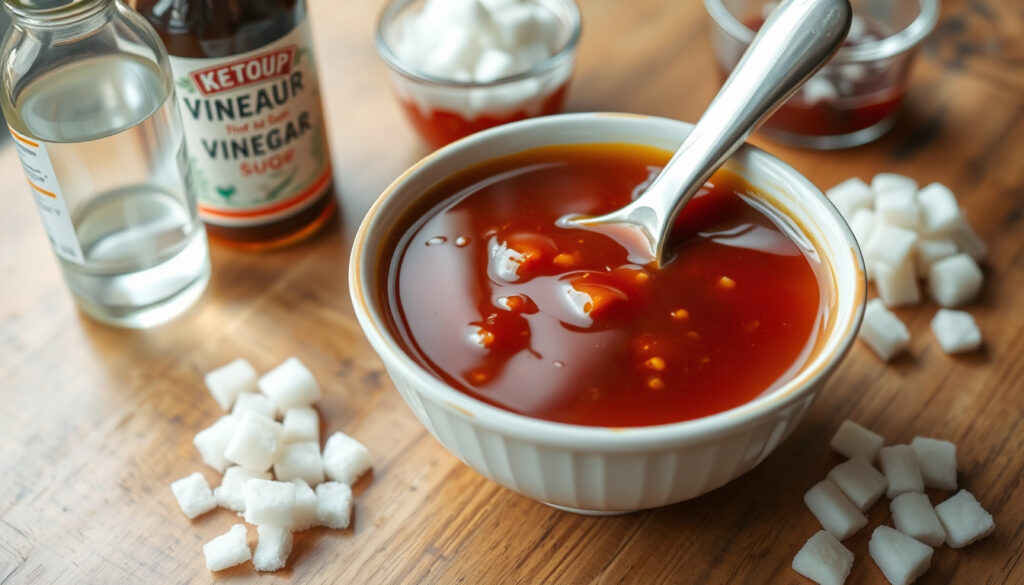
Sweet and Sour Sauce – Simple 3 & 4 Ingredient Recipe
Sweet and sour sauce is a staple in many kitchens, often associated with takeout dishes like chicken or pork. But what exactly goes into that glossy, tangy-sweet condiment, and how hard is it to make at home? With just a few common pantry ingredients, you can whip up a homemade version that rivals anything from a jar. This guide breaks down the essential ingredients, the simplest recipes, and what to look for in UK supermarkets like ASDA and Tesco.
What Are the Essential Ingredients for Sweet and Sour Sauce?
The core of any sweet and sour sauce is a balance between two opposing forces: an acid and a sweetener. In most home kitchens, this translates to a few key components that create the familiar taste.
Prep Time 5 minutes
Main Ingredients Ketchup, vinegar, sugar, soy sauce
Difficulty Very easy
Origin Chinese / Western adaptation
Understanding the role of each ingredient helps you adjust the flavour to your liking. Here are the key insights into what makes this sauce work:
- Sweet and sour sauce is one of the easiest sauces to make at home, requiring only 3-5 common pantry ingredients.
- The core balance is between an acid (vinegar or pineapple juice) and a sweetener (sugar or honey).
- Homemade sauce is significantly cheaper and has fewer preservatives than store-bought versions.
- UK supermarkets ASDA and Tesco both sell ready-made sweet and sour sauce, but homemade offers superior flavour control.
- Pineapple is traditional in many recipes but is not essential; a vinegar-sugar substitution works well.
- A cornstarch slurry is the standard way to achieve the glossy, thick texture associated with takeout sauce.
- Western recipes often rely on ketchup as a base, while more traditional Chinese versions might use tomato paste or fresh tomatoes.
| Characteristic | Details |
|---|---|
| Best for | Stir-fry chicken, pork, shrimp, or as a dipping sauce |
| Key ingredient | Rice wine vinegar (or white vinegar with a pinch of salt) |
| Thickener | Cornstarch slurry (1 tbsp cornstarch + 2 tbsp water) |
| Shelf life | Up to 2 weeks refrigerated in an airtight container |
| Vegan option | Yes (use vegan sugar or agave) |
| Gluten-free option | Yes (use tamari instead of soy sauce) |
How Do You Make Easy Sweet and Sour Sauce (3 or 4 Ingredients)?
The shortest possible ingredient list for a proper sweet and sour sauce usually starts at four items. While a true 3-ingredient version is not clearly supported by common recipes, a simple 4-ingredient formula is very achievable. One recipe uses ketchup, white vinegar, brown sugar, and soy sauce.
The 4-Ingredient Base Recipe
This version comes together in minutes and requires no cornstarch. It thickens naturally as it cools. Combine 3 tablespoons of ketchup, 3½ tablespoons of white vinegar, 3½ tablespoons of brown sugar, and 1 tablespoon of soy sauce. Heat everything in a small pan, stir well, and simmer for 2–3 minutes until slightly thickened.
Adding a Cornstarch Slurry for a Takeout Texture
If you prefer the thicker, glossier consistency of a restaurant-style sauce, a cornstarch slurry is the standard technique. One recipe calls for 1 tablespoon of cornstarch mixed with 2 tablespoons of water. Combine this with 2/3 cup of vinegar, 1/2 cup of brown sugar, 2 tablespoons of ketchup, and 2 teaspoons of soy sauce. Boil, stir in the slurry, and cook for 1–2 minutes until the sauce is glossy and thick.
A Standard Pantry Formula
For a slightly larger batch that stores well, a 5-ingredient formula is a solid option. One source suggests using 1 cup of sugar, 3/4 cup of water, 1/2 cup of white vinegar, 2 tablespoons of cornstarch, and 2 tablespoons of ketchup. This version is reported to keep well in the fridge for up to 3 weeks.
For a richer flavour, some recipes include a clove of garlic or a piece of ginger. One variation adds apple cider vinegar, water, garlic, and optional ginger for a more complex taste.
Can You Make Sweet and Sour Sauce Without Pineapple?
Yes, and it is very common. Pineapple is often featured in Western adaptations of sweet and sour sauce, but it is not a necessary ingredient. The no-pineapple versions you can make at home rely on vinegar, sugar, ketchup, and soy sauce to achieve a very similar balance of sweet and sour.
The “authentic Chinese” note is important here. Many results for sweet and sour sauce recipes reflect home-style and Chinese-American versions. The pineapple-based versions are more prevalent in Western recipes, while the no-pineapple versions with vinegar, sugar, ketchup, and soy sauce are often considered closer to the basic sweet-sour balance people expect from takeout sauce.
To replicate the subtle tang of pineapple without using the fruit itself, some cooks add a splash of rice vinegar or a small amount of apple cider vinegar. This helps maintain the acidic depth that pineapple juice would normally provide.
What Are the Best Store-Bought Sweet and Sour Sauces in the UK?
Specific products from ASDA and Tesco are not clearly named in available recipe sources, but sweet and sour sauce is a staple item in UK supermarkets. It is typically found in bottled or jarred form in the condiment aisle or the world-food section. Both ASDA and Tesco offer their own-brand versions alongside popular brands like Blue Dragon or Sharwood’s.
Store-bought sauces are often more convenient but can contain higher levels of sugar and preservatives than homemade versions. If you are looking for a quick option, checking the ingredient list for the balance of vinegar to sugar can help you gauge the flavour profile.
The main difference between homemade and store-bought is control. Making your own allows you to adjust the sweetness, tanginess, and thickness to your exact preference. For a UK-specific guide on what is available, the blog at Orientalmart.co.uk provides context on retail options and simple recipes.
What Is the Best Authentic Chinese Sweet and Sour Sauce Recipe?
The term “authentic Chinese” sweet and sour sauce is somewhat fluid. Traditional Cantonese cooking uses a balance of sugar and vinegar, often with hawthorn or plum sauce as a base, according to some sources. However, the most widely available “authentic” recipes found online are often Chinese-American adaptations.
For a version that aims for a more traditional flavour profile, you might look at recipes from authoritative sources like BBC Good Food or Serious Eats. These recipes often start with a base of pineapple juice, rice vinegar, brown sugar, ketchup, and soy sauce, thickened with a cornstarch slurry. It is a flavour profile many recognise from takeout, even if it is a Westernised interpretation of the concept.
A Brief History of Sweet and Sour Sauce
The appeal of sweet and sour flavours has a long history that spans centuries and continents.
- Ancient China: Sweet and sour flavours first appear in Chinese cuisine, often using sugar and vinegar marinades for preservation and taste.
- 18th–19th century: Cantonese immigrants popularise sweet and sour dishes in the West, adapting them to local palates and available ingredients.
- Mid-20th century: The Westernised version emerges, heavily relying on ketchup for sweetness and colour, and often including pineapple juice.
- Present: Countless variations exist, from 3-ingredient shortcuts to more complex authentic Cantonese recipes, each offering a different take on the classic balance.
What Is Certain and Uncertain About Sweet and Sour Sauce Recipes?
| Established Information | Information That Remains Unclear |
|---|---|
| The essential ingredients are ketchup (or tomato puree), vinegar, sugar, and soy sauce. | Exact proportions vary by personal taste; you should use the ranges suggested and adjust. |
| A 4-ingredient version is achievable by mixing ketchup, brown sugar, white vinegar, and soy sauce. | Authentic Chinese sweet and sour sauce may differ further, potentially using hawthorn or plum sauce. |
| Sweet and sour sauce is simple to make in under 10 minutes. | Store-bought sauces (ASDA, Tesco) are more convenient but often contain more sugar and preservatives. |
| Pineapple juice adds a distinct flavour and acidity but is not mandatory. | The exact product names and formulations for ASDA and Tesco sweet and sour sauces are not specified in common recipe sources. |
Why Is Sweet and Sour Sauce So Popular?
The enduring popularity of sweet and sour sauce lies in its high-contrast flavour profile, which pairs exceptionally well with fried foods. The combination of a sharp, acidic note followed by a wave of sweetness creates a satisfying complexity that works as both a coating and a dipping sauce.
Western recipes rely heavily on ketchup for that base flavour and colour, whereas traditional Chinese versions often start with tomato paste or fresh tomatoes to achieve a similar but less sweet result. Pineapple, when used, provides natural sweetness and acidity. When it is removed, the balance shifts more towards a vinegar-based tang, which some people prefer for a sharper finish.
For those looking to explore other homemade condiments, you might find our guide on Is All Purpose Flour the Same as Plain Flour – A Clear Guide useful for understanding common ingredient substitutions.
What Do the Experts Say About Sweet and Sour Sauce?
Several authoritative sources provide clear, tested recipes for sweet and sour sauce. Here is what they recommend:
200ml pineapple juice, 100g light brown soft sugar, 4 tbsp tomato ketchup, 2 tbsp soy sauce, 3 tbsp rice wine vinegar, 1 tbsp cornflour.
— BBC Good Food, on a traditional recipe method
Really simple versions of sweet and sour can be made by mixing just four staple ingredients: brown sugar, ketchup, white vinegar and soy sauce.
— Orientalmart.co.uk, on a simplified 4-ingredient version
In a medium saucepan, combine pineapple juice, rice vinegar, brown sugar, ketchup, and soy sauce and bring to a boil over medium heat.
— Serious Eats, on their detailed approach with a cornstarch slurry
What Is the Best Way to Use Sweet and Sour Sauce?
Sweet and sour sauce is incredibly versatile. It is classic as a coating for battered chicken or pork, but it also works wonderfully as a dipping sauce for spring rolls, tempura, or tofu. You can also brush it onto grilled meats or stir-fry vegetables for a quick glaze. If you are planning a meal, our recipe for Chicken and Chorizo Pasta – Quick Recipes and Variations offers another flavourful option to explore.
Frequently Asked Questions
Is sweet and sour sauce gluten free?
It can be, if you use tamari or a gluten-free soy sauce instead of regular soy sauce.
Can I freeze sweet and sour sauce?
Yes, freeze in an airtight container for up to 3 months. Thaw and reheat gently.
How long does homemade sweet and sour sauce last?
Refrigerated in a sealed jar, it keeps for up to 2 weeks.
What can I serve sweet and sour sauce with?
It is classic with battered chicken or pork, but also works with spring rolls, tempura, or tofu.
Is sweet and sour sauce vegan?
Usually yes, but check for honey in some recipes; use agave or sugar instead.
More related posts
 Weather in Edinburgh 10 Days – Mild Spring with Sunny Spells
 Zsa Zsa Gabor – Biography, Marriages, Net Worth and Death
 Ray-Ban Meta Glasses – Features, Price, Review Guide
 Paul Eddington – Cause of Death, Wife, and Last Words
 24 Hour Locksmith London – Costs, Response Times and Reliability Tips
 How to Cook a Turkey – 2025 Guide with Timing and Tip
 Myles Smith – Biography, Age, Tour, and Hit Songs 2026