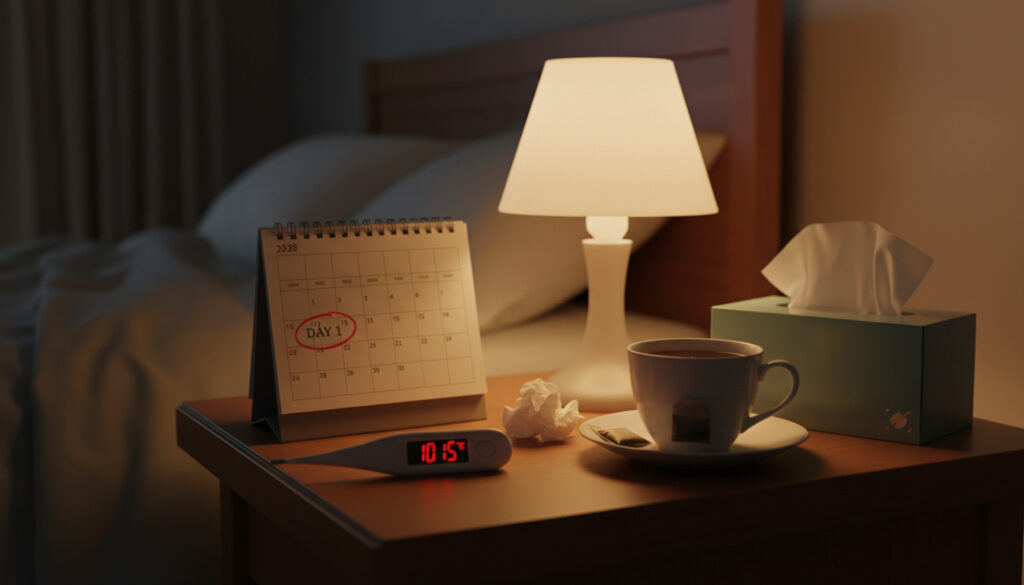
Day 1 Chicken Pox Adults – Symptoms Before Rash
Chickenpox in adults typically announces its arrival differently than in children. While youngsters often wake up with visible spots, grown-ups frequently spend day one battling intense flu-like symptoms that precede any recognizable rash. This prodromal phase represents the immune system’s initial response to the varicella-zoster virus, manifesting as fever, malaise, and body aches that can mask the infection’s true nature during the first twenty-four hours.
The initial day proves critical for diagnosis and intervention. Medical authorities consistently report that adult cases carry significantly higher complication risks than childhood infections, making early recognition essential. Understanding what happens during this window helps patients distinguish between common respiratory illness and the beginning of a potentially serious varicella infection.
What Are the First Symptoms of Chickenpox on Day 1 in Adults?
Incubation Period
10-21 days pass silently between exposure and symptom onset.
Prodromal Indicators
Fever, fatigue, headache, and loss of appetite dominate early.
Rash Emergence
Flat red macules may appear on chest, back, or face.
Transmission Risk
Contagiousness begins 1-2 days before visible skin lesions develop.
- Adults experience prominent prodromal symptoms unlike most children, who present with rash first
- Low-grade to moderate fever typically appears before any skin manifestation
- Contagiousness commences during day one via respiratory droplets
- Pneumonia risk increases significantly in adult populations
- Secondary bacterial skin infections threaten as complications progress
- Immunocompromised patients face potential hemorrhagic lesion development
- Antiviral treatment remains effective only within 72 hours of rash onset
| Clinical Feature | Day 1 Adult Presentation |
|---|---|
| Incubation Status | 10-21 days post-exposure completed |
| Prodrome Duration | 24-48 hours before rash eruption |
| Thermal Response | Low-grade to moderate fever |
| Systemic Symptoms | Malaise, headache, fatigue, myalgia |
| Gastrointestinal Signs | Nausea or abdominal pain may occur |
| Dermatological Status | Absent or minimal erythematous macules |
| Appetite Impact | Anorexia commonly reported |
| Contagion Phase | Active via respiratory secretions |
| Pain Profile | Generalized body aches, cephalgia |
| Severity Indicator | Higher risk profile than pediatric cases |
| Intervention Window | Antivirals pending rash confirmation |
How Does Chickenpox Progress on Day 1 for Adults?
When Does the Rash Appear?
The characteristic rash typically emerges 24-48 hours after initial systemic symptoms. According to the CDC, adults first notice red macules on the chest, back, or face. These flat spots rapidly evolve into raised papules, then fluid-filled vesicles. The progression accelerates in unvaccinated adults, with new lesions appearing while others crust.
How Long Does the Initial Phase Last?
The prodromal phase spanning day one lasts approximately 24 to 48 hours. Medical literature confirms that during this period, patients remain contagious despite the absence of visible skin lesions. Respiratory transmission poses the greatest threat to household contacts and coworkers.
Acyclovir or valacyclovir demonstrates maximum effectiveness when initiated within 72 hours of rash onset. Adults experiencing fever and malaise should monitor closely for the first skin spots to ensure prompt medical consultation.
Why Is Chickenpox Often Worse on Day 1 in Adults?
Is the First Day More Severe for Adults?
Clinical data confirms that chickenpox manifests more severely in adults than children. The immune systems of grown patients mount aggressive inflammatory responses to the varicella-zoster virus, triggering pronounced fever and systemic symptoms that children often escape.
What Complications Threaten Adults?
Pneumonia represents the most critical threat, carrying 10-30% mortality if left untreated. Adults face elevated risks of bacterial skin infections, encephalitis, dehydration, and sepsis. Immunocompromised individuals may develop hemorrhagic lesions or multi-organ involvement during the initial illness phases.
What Should Adults Do on Day 1 of Chickenpox?
Can Exposure on Day 1 Cause Infection?
Adults who have never contracted varicella or received vaccination remain susceptible to infection through respiratory droplets from contagious individuals. The virus spreads efficiently during the prodromal phase, meaning day one patients transmit illness before knowing they have chickenpox.
What Immediate Steps Prevent Complications?
Medical guidelines recommend contacting healthcare providers immediately to discuss antiviral prescriptions. Valacyclovir or acyclovir requires initiation within 24-72 hours of rash onset to reduce severity. Patients should isolate completely, maintain hydration, and monitor for warning signs.
Seek immediate medical attention for shortness of breath, chest pain, persistent high fever, confusion, reduced urination, or severe skin infections. These symptoms may indicate pneumonia, encephalitis, or sepsis requiring hospitalization.
Acetaminophen reduces fever and pain, while calamine lotion or oatmeal baths soothe eventual itching. Avoid aspirin due to Reye’s syndrome risk. Keep nails short and skin clean to prevent secondary bacterial infection.
How Does Day 1 Fit Into the Chickenpox Timeline?
- Incubation Phase: Following exposure, the virus remains silent for 10-21 days while replicating in respiratory tissues.
- Prodrome Initiation: brings fever, headache, fatigue, and malaise; contagious viral shedding begins via respiratory secretions.
- Peak Respiratory Contagion: During day one and early day two, patients remain most infectious to unvaccinated contacts despite lacking visible symptoms.
- Initial Lesion Formation: Late day one or early day two marks the appearance of red macules on the trunk, face, or scalp.
What Is Certain vs. Uncertain About Day 1 Chickenpox?
| Established Medical Facts | Remaining Uncertainties |
|---|---|
| Prodromal symptoms reliably precede rash by 24-48 hours in adults | Exact hour of rash emergence varies significantly by individual immune status |
| Fever and malaise consistently mark day one presentation | Duration of initial fever difficult to predict for specific patients |
| Adults suffer measurably higher complication rates than children | Precise severity prediction for individual adults remains imprecise |
| Respiratory contagiousness begins before skin lesions appear | Viral shedding intensity fluctuations during prodrome not fully quantified |
| Antiviral therapy requires administration within 72 hours of rash | Effectiveness of intervention initiated before rash visibility unconfirmed |
Why Do Adults Experience Different Day 1 Symptoms Than Children?
Historically considered a childhood disease, chickenpox presents distinct epidemiological challenges when striking adult populations. DWP Home Ownership Pensioners – Pension Credit Rules Explained The virus exploits immunologically naive systems, replicating rapidly in respiratory mucosa before disseminating through the bloodstream to skin tissues. This hematogenous spread explains why adults experience more systemic upset during the first days of illness.
Prior to widespread vaccination programs, adults who escaped childhood infection faced particularly brutal initial symptom phases. The absence of specific cellular immunity forces the adult body to rely on inflammatory responses that generate fever, malaise, and respiratory symptoms absent in partially immune populations.
What Do Medical Authorities Say About Adult Chickenpox?
Adults infected with varicella face significantly higher risks of severe complications than pediatric patients, with pneumonia representing the most common critical threat to adult populations.
Centers for Disease Control and Prevention
The prodromal phase in adults includes fever, headache, and general feeling of being unwell, symptoms notably absent or mild in most childhood cases.
What Should Adults Remember About Day 1 Chickenpox Symptoms?
Day one of chickenpox in adults manifests primarily through systemic symptoms rather than skin lesions. Fever, malaise, and headache dominate the initial 24-48 hours, creating a diagnostic challenge that requires careful monitoring for the emergence of characteristic macular rash. DWP Home Ownership Pensioners – Pension Credit Rules Explained Prompt medical consultation enables timely antiviral therapy while isolation prevents transmission to vulnerable contacts.
Does chickenpox always cause fever on day 1 in adults?
Most adults develop low-grade to moderate fever during day one, though intensity varies. The fever typically precedes rash emergence by 24-48 hours and accompanies headache, fatigue, and malaise.
Can adults mistake day 1 chickenpox for flu or COVID-19?
Yes, the prodromal symptoms mirror influenza or other respiratory infections. The distinguishing feature emerges within 48 hours when the characteristic rash appears, beginning as flat red spots on the chest or back.
How is day 1 chickenpox different from shingles in adults?
Chickenpox represents primary infection with varicella-zoster virus, causing widespread symptoms. Shingles results from viral reactivation, presenting with localized painful rash following nerve pathways, typically without the systemic prodromal phase of primary infection.
Should adults go to the emergency room on day 1?
Emergency care becomes necessary only for severe breathing difficulty, chest pain, confusion, or persistent high fever. Otherwise, contact primary care providers for antiviral prescriptions while maintaining strict isolation.
Can the chickenpox vaccine help if given on day 1 of symptoms?
Vaccination prevents but does not treat active infection. However, if given within 3-5 days of exposure to a confirmed case, it may prevent or modify illness in unvaccinated adults. Once day one symptoms begin, antivirals replace vaccination as the appropriate intervention.
How long are adults contagious starting from day 1?
Contagiousness extends from 1-2 days before rash onset until all lesions crust over, typically 5-7 days total. Adults remain infectious throughout the prodromal phase despite appearing healthy.
More related posts
 Gold Standard Whey Protein – 2025 Lab-Tested Review Guide
 Rachel Stevens – Net Worth, Family and Life in 2025
 Varun Dhawan – Age, Height, Wife, Movies and Upcoming Films 2025
 Lesley Anne Down – Biography, Career and Complete Filmography
 Kirstie Alley – Biography, Cause of Death, and Life Story
 Camping and Caravan Club – Complete UK Guide for 2025
 Tottenham vs A.F.C. Bournemouth Standings – Table & Key Stats
 Can Dogs Eat Blackberries – Safety, Benefits and Feeding Guide