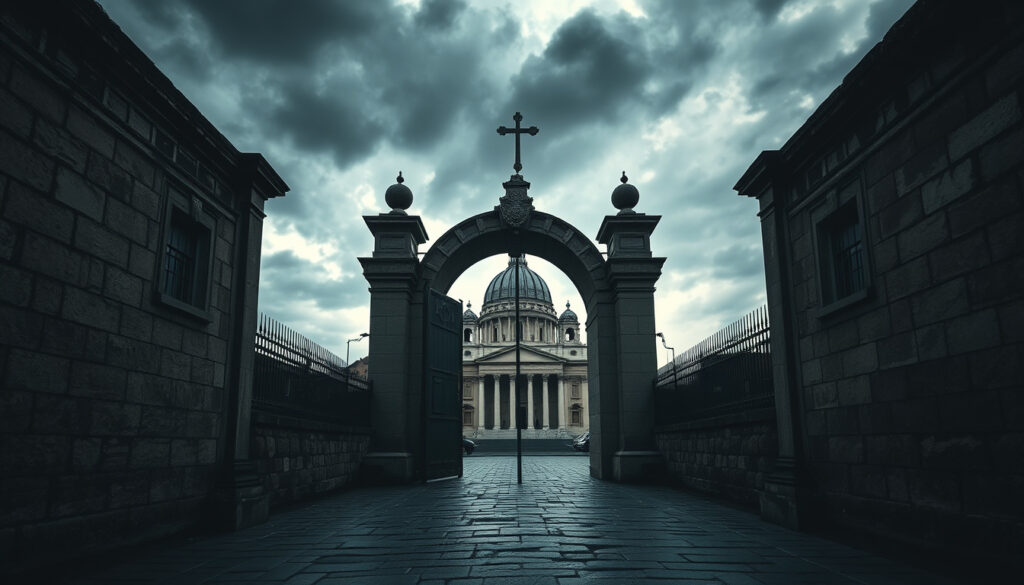
Saint Peter – Biography, Death and Symbolism of the First Pope
Saint Peter, originally named Simon, was a Galilean fisherman from Bethsaida. He worked alongside his brother Andrew before Jesus called both men to become disciples. Jesus gave him the name Peter—Greek Petros, meaning “rock”—and he became one of the Twelve Apostles and a leading figure in the New Testament. Britannica identifies him as a pivotal figure in the early church.
Peter appears prominently in all four Gospels and the Acts of the Apostles. He was part of Jesus’ inner circle, alongside James and John, and witnessed major events including the Transfiguration. His life weaves together moments of bold leadership, personal failure, and profound restoration, making him one of Christianity’s most recognizable and human figures. EBSCO notes his prominence among the apostles.
Portrayed as outspoken and impulsive, Peter confessed Jesus as the Messiah but later denied knowing him three times during Jesus’ arrest. After Jesus’ death and resurrection, he became a principal leader of the Jerusalem church. He preached publicly, performed healings, and helped extend Christianity beyond its original Jewish setting, according to Catholic.org and Britannica.
When and Where Was Saint Peter Born?
Peter was born in Bethsaida, a fishing village on the shore of the Sea of Galilee. The New Testament identifies him as Simon, and he later lived in Capernaum. Scholars commonly estimate his birth around 1 BC to 1 AD, though the exact year remains unknown.
Simon Peter, a fisherman from Bethsaida, was one of the Twelve Apostles and is considered the first pope by the Catholic Church.
Calling by Jesus, confession of faith, denial of Christ, Pentecost sermon, leadership in Jerusalem, missionary journeys, martyrdom in Rome.
Crossed keys (keys to the Kingdom of Heaven), inverted cross (manner of his crucifixion), rooster (his denial).
Patron saint of popes, fishermen, and locksmiths; feast day June 29; relics under St. Peter’s Basilica.
Key Insights
- Saint Peter was originally named Simon; Jesus renamed him ‘Peter’ (rock).
- He was a fisherman and lived in Capernaum.
- He walked on water, confessed Jesus as the Christ, and witnessed the Transfiguration.
- He denied Jesus three times but later repented and became the leader of the apostles.
- He is credited as the first Bishop of Rome (pope).
- He was crucified upside down, by his own request, according to tradition.
- His relics are believed to be buried beneath St. Peter’s Basilica in Vatican City.
Snapshot Facts
| Field | Detail |
|---|---|
| Name at birth | Simon (Simeon) |
| Given by Jesus | Peter (Cephas) – meaning ‘rock’ |
| Birthplace | Bethsaida, Galilee |
| Dates | Born c. 1 BC – 1 AD; Died c. 64–68 AD |
| Feast Day | June 29 (with Saint Paul) |
| Manner of death | Crucifixion (upside down) |
| Major symbols | Keys, inverted cross, rooster, fish |
| Patronages | Popes, fishermen, locksmiths, Rome |
| Burial site | Vatican Necropolis, St. Peter’s Basilica |
How Did Saint Peter Die?
The strongest and most widespread Christian tradition holds that Peter died as a martyr in Rome during the persecution of Christians under Emperor Nero. His death is generally dated between 64 and 68 CE, with Britannica giving approximately 64 CE and other traditions favoring 67–68 CE.
Martyrdom under Nero
Early church tradition consistently places Peter in Rome during the final years of his life. The reign of Nero, marked by the intense persecution of Christians following the Great Fire of Rome in 64 CE, provides the historical backdrop for his execution. Wikipedia notes that this tradition is both strong and widely accepted.
Crucifixion and the Inverted Cross
According to later accounts, Peter was crucified upside down at his own request because he considered himself unworthy to die in the same manner as Jesus. This detail comes from later Christian tradition, especially accounts associated with the Acts of Peter, rather than from the New Testament itself. World History Encyclopedia emphasizes the apocryphal nature of this specific detail.
The account of Peter’s upside-down crucifixion is not recorded in the canonical New Testament. It appears in later apocryphal texts, such as the Acts of Peter, but was widely accepted and repeated by early Christian writers and subsequent tradition.
Burial and the Vatican Excavations
Tradition places his execution near Vatican Hill and his burial near the site now occupied by St. Peter’s Basilica. Archaeological investigations beneath the Vatican uncovered a first-century tomb and inscriptions interpreted by some scholars as evidence connected with Peter, although the identification remains debated.
What Is the Meaning and Symbolism of Saint Peter?
Peter’s meaning in Christian tradition is deeply tied to the symbols associated with his life and ministry. These symbols—keys, a rooster, a fishing boat, and an inverted cross—each tell a part of his story.
The Keys of the Kingdom
In Matthew 16:18–19, Jesus tells Peter that he is the “rock” on which the church will be built and gives him “the keys of the kingdom of heaven.” This passage is the main biblical basis for Peter’s distinctive authority in Roman Catholic teaching. The keys symbolize the authority to “bind and loose”—traditionally understood as authority to teach, govern, forgive, and make authoritative judgments within the church. This foundational text can be read directly at Bible Gateway.
In Christian iconography, the crossed keys represent the spiritual authority given to Peter. They are often shown in gold and silver, symbolizing the power to bind and loose. In Catholic tradition, they remain the central emblem of papal authority.
The Rooster and the Denial
Peter denied knowing Jesus three times during Jesus’ arrest, an episode traditionally associated with the rooster symbol. The rooster serves as a lasting reminder of his human failure, his subsequent repentance, and the vigilance required of the faithful.
The Fisherman and the Inverted Cross
Peter’s former occupation as a fisherman gave rise to the symbol of the fishing boat or net, connected to Jesus’ call to become a “fisher of men.” The upside-down cross represents the traditional form of his martyrdom. These symbols are consistently referenced in DBpedia and Wikipedia entries on the apostle.
What Is the Timeline of Saint Peter’s Life?
The chronology of Peter’s life is assembled from the Gospel narratives and early church tradition. The following timeline highlights the major known and traditionally accepted events.
- c. 1-5 AD: Born in Bethsaida as Simon.
- c. 27-29 AD: Called by Jesus to be a disciple (Matthew 4:18-20).
- c. 29 AD: Confession of Peter: ‘You are the Christ’ (Matthew 16:16).
- c. 30 AD: Denial of Jesus during His trial.
- c. 30 AD: Resurrection appearance to Peter; restoration (John 21).
- c. 33 AD: Pentecost sermon, leading the early church.
- c. 44 AD: Imprisonment by Herod Agrippa I, miraculous release (Acts 12).
- c. 49 AD: Council of Jerusalem (Acts 15).
- c. 64-68 AD: Martyrdom in Rome, crucifixion upside down.
- 1506-1626: Construction of new St. Peter’s Basilica.
What Is Historically Certain and What Remains Unclear About Saint Peter?
Much of what is known about Saint Peter comes from the New Testament and early church tradition. Some details are historically certain; others are based on reliable tradition or scholarly consensus. Navigating this distinction helps clarify his actual historical footprint versus later theological development.
| Established Information | Information That Remains Unclear |
|---|---|
| Peter was a historical figure, a disciple of Jesus, and a leader of the early Christian community. | Exact year of birth is unknown (commonly estimated around 1-5 BC). |
| He was martyred in Rome during the reign of Emperor Nero (c. 64-68 AD). | Exact date of death is unknown (traditional date June 29 but not verified). |
| His original name was Simon; Jesus called him Peter. | The story of being crucified upside down is from non-biblical sources (e.g., Acts of Peter), widely accepted but not explicitly in Scripture. |
| The Gospels record his denial of Jesus. | Whether he resided in Rome continuously before his death is debated. |
| — | The exact location of his tomb is based on archaeological excavations that are generally accepted but not absolutely proven. |
This distinction between historical fact and traditional belief is a frequent point of focus in biographical studies. Just as with other historical figures, separating documented events from later legend presents a challenge. The biographical approach of examining myths versus facts can be seen in the article on Helen Keller – The Real Story Behind the Myths.
What Is Saint Peter’s Significance in Christian History?
Saint Peter is one of the most important figures in Christianity. He was the spokesman for the apostles, the recipient of the ‘keys of the kingdom,’ and is regarded by Catholics as the first pope. His life illustrates themes of human weakness, repentance, and leadership. In the New Testament, he appears as bold yet fallible. After Pentecost, he emerges as a bold preacher.
His primacy has been a point of division between Catholicism and other Christian traditions. Catholic interpretation sees Peter’s commission as continuing through the bishops of Rome, who are regarded as his successors. Other Christian traditions interpret the calling differently and dispute that it establishes a papal office in the later Roman Catholic sense, as detailed in the historical development of papal primacy.
Historical evidence from Clement of Rome, Ignatius, and Irenaeus supports his presence and leadership in Rome. The discovery of ‘Peter’s Tomb’ in the Vatican Necropolis in the 20th century added archaeological weight to the tradition. Tradition also associates Peter with Antioch before Rome, and Catholic and Eastern Christian traditions describe him as an early bishop of both cities, according to DBpedia. The religious context surrounding figures like Peter also appears in modern discussions of traditionalist Catholicism, such as the profile on Nick Fuentes – Who He Is and Why He Matters.
The identification of the tomb excavated beneath St. Peter’s Basilica remains a subject of scholarly discussion. While some interpret the inscriptions and remains as evidence connected to Peter, the findings are not universally accepted as conclusive proof.
What Are the Key Sources and Quotes Associated with Saint Peter?
The primary sources for Peter’s life are the New Testament Gospels and the Acts of the Apostles. Additional historical context comes from early church fathers such as Clement of Rome, Eusebius, and later compilations like the Catholic Encyclopedia. The following quotes represent pivotal moments in his narrative.
“You are the Christ, the Son of the living God.”
— Matthew 16:16 (Peter’s confession)
“I do not know the man!”
— Matthew 26:72 (Peter’s denial)
“I will give you the keys of the kingdom of heaven.”
— Matthew 16:19 (Jesus to Peter)
Who Was Saint Peter and Why Does His Legacy Endure?
Peter’s enduring importance comes from the combination of his leadership, his failure and restoration, his role in the early church, and his status as the foundational predecessor of the Roman bishops. The Feast of Saints Peter and Paul is observed on June 29 in many Christian traditions. He remains one of Christianity’s central apostolic figures, honored as a saint, apostle, martyr, and—within Catholicism—the first pope.
Frequently Asked Questions
What is the Saint Peter restaurant?
The phrase ‘Saint Peter restaurant’ likely refers to a restaurant chain or local establishment named after Saint Peter, not directly related to the apostle. There is no widely known single restaurant associated with Saint Peter.
Who was Saint Peter’s brother?
Saint Peter’s brother was Andrew. Both were fishermen from Bethsaida, and Jesus called them to become disciples together.
What is the Feast Day of Saint Peter?
The Feast of Saints Peter and Paul is observed on June 29 in many Christian traditions.
What are Saint Peter’s main symbols?
His principal symbols are keys, a rooster, a fishing boat or net, and an upside-down cross.
Does the Bible mention Saint Peter’s upside-down crucifixion?
No. The detail comes from later Christian tradition, particularly the Acts of Peter, and is not explicit in the New Testament.
Where is Saint Peter’s tomb?
Tradition places his burial beneath St. Peter’s Basilica in Vatican City, where archaeological investigations uncovered a first-century tomb.
More related posts
 Pick a Number Between 1 and 2 – Free Online Random Picker
 Mo Gilligan – Biography, Net Worth, Tour 2025, and TV Shows
 163 cm in Feet – Exact Conversion and Growth Guide
 Peter Greene – Cause of Death, Movies, and Legacy
 Chinese Yen to GBP – Live Rate and Conversion Guide
 Emile Heskey – Career, Personal Life, and Net Worth
 Only Fools and Horses – Complete Guide to Cast Episodes and Car
 Eubank v Benn 2 – Conor Benn Wins Unanimous Decision Full Breakdown